Lingfield College Economics

Blog resource for 6th Form, with contributions from teachers and students.

Quote of the day

“I find economics increasingly satisfactory, and I think I am rather good at it.”– John Maynard Keynes
Showing posts with label government intervention. Show all posts

Tuesday, 2 January 2024

Do anti-poverty programmes increase poverty?

 Sounds like a silly question until you dig a little deeper; there is some solid material here for evaluation points:

Still Failing to Learn the Lessons of Antipoverty Programs

Gary M. GallesGary M. Galles 
– December 30, 2023
LinkedInPinterestRedditFlipboardEmailShare

One of the lesser-known realities of the War on Poverty was that while poverty rates were falling substantially before it began, that progress came to an abrupt halt, fantastically, with its implementation. Without understanding this, people can remain blind to the lesson about how “fighting” poverty can undermine progress against it. And that may be particularly important to grasp now as, decades later, similar effects seem to be spreading to a far-larger population.

Before we turn to its current implications, we would benefit from reviewing explanations for how the War on Poverty failed. To my mind, the most insightful explanation comes from James Gwartney and Thomas McCaleb, in Have Antipoverty Programs Increased Poverty?

Gwartney and McCaleb discussed four ways incentives were worsened by those programs: through increased real benefits, increased implicit tax rates, decreased incentives to acquire and retain skills, and decreased incentives to avoid adverse lifestyle choices. Of particular importance today is their analysis of why the effects of such programs will be more adverse, both the longer they last and the younger are those impacted.  

The first mechanism is that “increases in the real value of benefit payments make dependency on the government even more attractive compared with the alternative of self-support.” That effect will be greater for younger workers, whose earnings potential is lower than older, more educated, and experienced workers.

The second mechanism arises because means-tested poverty programs reduce benefits as households earn more, imposing the equivalent of an additional income tax on increased earnings. And when the reality of multiple programs is factored in, that implicit tax rate can be very high — far higher than the highest official tax rate on earned income, and in some circumstances, well over 100 percent. Consequently, “Such high implicit marginal tax rates pose a significant disincentive to work for those individuals whose potential earnings are relatively low.” 

The third mechanism reduces skills, because individuals who have not used their skills for extended periods experience erosion in those skills. Not only does this worsen the longer such incentives persist, the effect is greater for younger workers because, “As transfers make dependency more attractive relative to work experience, schooling, and other forms of human capital investment, youthful recipients fail to develop skills that have in the past enabled the young to escape from poverty.” That is, it is not just that existing skills erode with disuse, but when disincentives mean skills are unlikely to pay off economically, the incentive to acquire those skills in the first place is also diminished. 

The moral hazard effect arises because substantial increases in government assistance can enable some to choose “a lifestyle that increases the likelihood of poverty.” And that incentive is more damaging to one’s productive life the earlier it begins.

Gwartney and McCaleb noted that there were hardly any adverse incentive effects on low-income families whose members were retired, and smaller effects on those of working age, the older they were. The effects were much more severe for younger people, particularly those not yet in the labor force, who were (or should be) in the skill-acquisition stage.

To test whether the data corresponded to their analysis, Gwartney and McCaleb went one step further. Rather than just looking at overall poverty rates, they looked at poverty rates broken down by the ages of the householder, to compare the magnitude of the consequences of the disincentive effects on younger low-income households compared to older low-income households.

The effects they found were significant. After the substantial decreases in poverty for all age groups before the War on Poverty began, both official poverty rates and poverty rates adjusted for in-kind benefits (not officially counted as income) for the elderly (for whom the disincentive effects are minimal), continued to fall dramatically, from 15.9 percent in 1968 to 5.5 percent in 1982. For the 45-54 age bracket, adjusted poverty rates fell from 6.7 percent in 1968 to 5.8 percent in 1975, rising thereafter to 8 percent. For the 25-44 age bracket, adjusted poverty rates only fell from 8.6 percent to 8.5 percent at first, but rose substantially after, to 12.3 percent in 1982. Finally, for the youngest group studied, householders under 25, adjusted poverty rates rose from 1968 on, from 12.3 percent in 1968 to 24 percent in 1982.

So how is this “old news” important to current news? There were huge increases in such disincentives both during the Great Recession and during the course of COVID-19 recovery and its associated government policies.

The real (after adjusting for inflation) level of government benefits increased because the duration of benefits for unemployment was substantially extended (to 99 weeks at their peak). For a period in 2020, the federal government added $600 per week to state unemployment benefits (in many cases, making those benefits not only greater than they would otherwise be eligible for but more than they could earn). Eligibility for Medicaid (MediCal in California) was significantly expanded, subsidies for Obamacare policies grew, and there were even rental abeyance programs that allowed many to remain in their homes rent free.

To the extent that assistance programs focus on lower-income families, those programs will add to what recipients’ cumulative marginal tax rate (as economists call it, although it is technically a cumulative marginal benefit reduction rate), and subtract more from what they get to keep in take-home pay from producing for others in markets. Phaseouts of Obamacare subsidies with income do the same thing. Even more striking are “eligibility cliffs” where substantial benefits (e.g., free Medicaid for a parent with small children, which is worth thousands of dollars) disappear entirely when a certain income level is reached. 

The incentive to let skills depreciate with disuse, and more importantly, not acquiring skills in the first place, proceeded primarily from restrictions and lockdown effects on employment opportunities and a host of educational policies under COVID, from ineffective online instruction to grade inflation that undermined potential employers’ ability to differentiate between students with particular skills and those without them. Efforts to leave traditional public schools and the disincentives they produced were also hamstrung by attacks on charter schools and voucher proposals.

Many COVID-induced changes taught students the wrong lifestyle-choice lessons, as well. Rules often lost all meaning. Cheating exploded, with virtually no enforcement against it. Students learned that absenteeism carried no penalty, in contrast to the serious penalties the “real world” can impose on its practice. They learned to expect a level of coddling that meant almost every failure to do one’s work was excused, and virtually nothing they could do would earn them a failing grade on anything, much less get them kicked out of school. 

In sum, it seems like our failure to recognize what Gwartney and McCaleb did almost four decades ago — just how seriously the adverse effects of our efforts to “help” people hurt them instead — has come back to haunt America with a vengeance. We have recently doubled down on more of the same types of policies, which means we will see even more of their adverse effects. 

That has certainly left us in a bad place in many ways. But that does not mean we should give up, acquiescing to an unacceptable status quo. We still have time to recognize that “better late than never” reforms give us a chance to move upward as we go forward from where we are. As Gwartney and McCaleb concluded:

The current system of income transfers confronts the poor with perverse incentives that discourage self-help efforts in the short run and induces recipients to make decisions that retard their ability to escape poverty in the long run…The problem of poverty continues to fester not because we are failing to do enough, but rather because we are doing so much that is counterproductive.

Posted by Joss Bolton at 11:30 No comments:
Email ThisBlogThis!Share to XShare to FacebookShare to Pinterest
Labels: dependency, government failure, government intervention, poverty, welfare state

Sunday, 29 January 2023

Government intervention & unintended consequences...

 DOMINIC LAWSON

Our leaders do policies, but they can’t do human

From heating to eating, voters just do the opposite of what the state wants

Dominic Lawson
Sunday January 29 2023, 12.01am, The Sunday Times
Share
Save

Will someone break it to Keir Starmer that the policy at the heart of Labour’s promise of a “fairer, greener future” will achieve neither of those goals? He has declared: “It will be Labour’s national mission over the next decade to fit out every home ... to make sure it is warm and well insulated and costs less to heat.”

The Conservative government has already spent billions paying for people’s loft and cavity wall insulation, but those subsidies have been means-tested; Labour’s plan is to extend the handout to all homeowners and tenants. Ed Miliband, the shadow “climate change and net zero secretary”, says that unless the government adopts Labour’s plan, “we will have to import more gas from Putin”.

But what’s this? Reported by just one newspaper and not a single broadcaster, Cambridge University has published the first study of the “long-term effect of home insulation in England and Wales”. The two researchers, Cristina Penasco and Laura Diaz Anadon, studied the energy use of over 55,000 households on a National Energy Efficiency Data Framework panel, which had “retrofitted cavity wall insulation or loft installation”.

Those who had installed cavity wall insulation reduced their use of gas by 7 per cent in the first year, 2.7 per cent in year two ... but by year four “any energy savings were negligible”. With loft insulation, worse still: the energy savings “disappear after two years”. This was because people’s behaviour would change in certain predictable ways: they would take more showers, wander around the house with fewer (or no) clothes on and, if it got too hot, rather than turn the thermostat down, open the windows — a sort of de-insulation. Moreover, the insulation they installed would frequently be followed by the addition of a conservatory: a brilliant way to make your home less energy-efficient, if much more enjoyable.

None of this will surprise economists: it is an example of the “rebound effect”, so named by William Jevons in 1865, when, as the Cambridge researchers remind us, “he observed that more efficient steam engines increased rather than reduced coal use, as engines were put into more widespread use”.

I suspect this will come as a startling shock to the politicians, who can be surprisingly ignorant — or perhaps wilfully overconfident — about the way humans respond to policies designed to change behaviour. The most spectacular example is the introduction of a minimum unit price (MUP) for alcohol by the Scottish government in 2018. Nothing like it had been attempted previously: the first minister, Nicola Sturgeon, boasted that “the eyes of the world will be on Scotland” and that it would “save lives”. To be fair to her, this was encouraged by such august figures as Sir Ian Gilmore, the chairman of the Alcohol Health Alliance, who described the 50p-a-unit minimum price as “evidence-based policy exquisitely targeted at those, and those around them, who are currently suffering harm”: he presumably meant the alcohol-dependent, especially those in straitened circumstances.

How did that work out? Last summer Public Health Scotland published an admirably dispassionate report on what the policy had achieved over five years. It concluded that it had had no effect whatever on the alcohol consumption of heavy drinkers; it just further impoverished them and their families. “People drinking at harmful levels who struggled to afford the higher prices arising from MUP coped by using, and often intensifying, strategies they were familiar with from previous periods when alcohol was unaffordable for them. These strategies included obtaining extra money ... via methods including reduced spending on food and utility bills, increased borrowing from family, friends or pawnbrokers.”

In other words, the policy caused more, not less, misery to the very families it claimed to help. Characteristically, Sturgeon has not conceded that it was at all mistaken. But at least, if her claim was right that the world would look at what she had achieved with her vaunted policy, the rest of the planet’s governments will now be saying: thank you, Scotland, for showing us exactly how not to deal with alcoholism among the poor.

Those grateful will include the Westminster government. But what of its own attempt to improve public health via pricing, with the so-called sugar tax? Last week the Medical Research Council published data purporting to show it had, to a degree, achieved its objective, provoking a slew of newspaper headlines such as “UK sugar tax ‘prevents 5,000 cases of obesity in year 6 girls annually’”.

In fact there was no decline in the levels of obesity in that particular year group. What the researchers did was set up a “counterfactual”: they posited that obesity would have continued to rise as it had in recent years, and noted that in the period since the announcement — not the implementation — of the sugar tax in 2013, the level of obesity in 11-year-old girls had remained the same (while increasing in girls of other age groups and in boys of every age).

It seems perverse to attribute the absence of further growth in obesity in a distinct year group and sex to the sugar tax: why would boys, and girls of other ages, not be affected in the same way? Could something else be behind the lack of increase in obesity of year 6 girls?

This point was made by Christopher Snowdon of the Institute of Economic Affairs on BBC Newsnight on Thursday; he has been a trenchant critic of both the Scottish MUP (presciently) and of the UK sugar tax. In respect of the sweet stuff he has observed that the effect of food companies “reformulating” products to meet Public Health England’s target of reducing sugar in processed foods was to drive people away from the now less sweet versions of yoghurts and cereals and towards other ways of getting their sugar fix. So, in the three years from 2015 to 2018, while sales of breakfast cereals plummeted, the now defunct PHE admitted that overall British consumption of sugar in foods increased from 723,000 tonnes to 742,000 tonnes. That does not constitute a policy triumph.

A reasonable question at this point is: why not stop merely criticising well-meaning policies and come up with better ones? All right. If what you want is to reduce reliance on gas: don’t subsidise the consumer for using it. If you want to reduce alcoholism, recognise that addiction is not affected by price increases and that the appropriate response is more expenditure on rehab and other treatment for this psychological disorder within the NHS.

As for obesity ... rationing aside, I have no idea, since it is an unavoidable consequence of something our ancestors could only dream of: superabundance.

dominic.lawson@sunday-times.co.uk

Posted by Joss Bolton at 08:40 No comments:
Email ThisBlogThis!Share to XShare to FacebookShare to Pinterest
Labels: Alcohol unit pricing, behaviour, government intervention, sugar tax, unintended consequences

Wednesday, 26 October 2022

Externalities externalities...

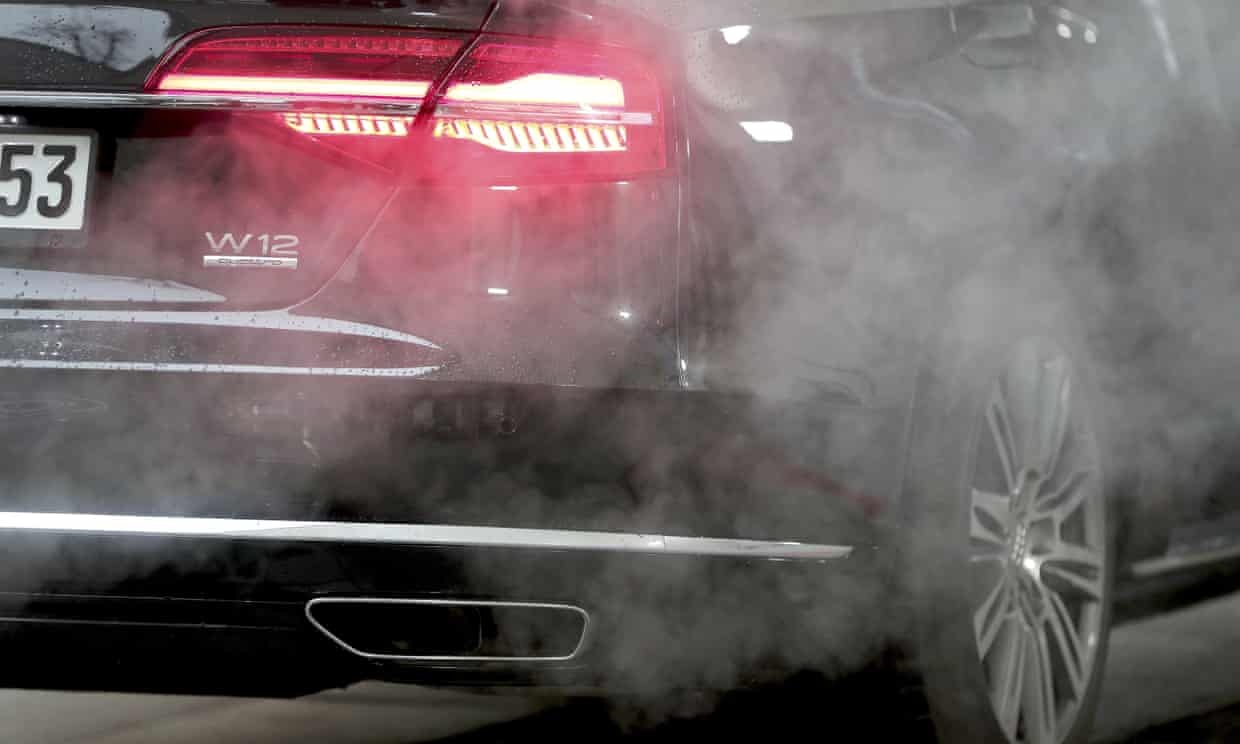
100m highly polluting cars could appear on Europe’s roads after EU move

Exclusive: Efficiency recommendations of experts rejected in European Commission ‘Euro 7’ proposals

Luxury Audi car surrounded by exhaust gases as it is parked with a running engine in front of the Chancellery in Berlin, Germany
The Transport & Environment campaign group said the European Commission had reached its ‘very own Dieselgate moment’. Photograph: Michael Sohn/AP
Arthur Neslen
Fri 21 Oct 2022 09.50 BST

Almost 100m highly polluting cars could appear on Europe’s roads over the next decade after the European Commission moved to disown its own experts efficiency recommendations in a leaked proposal seen by the Guardian.

About 70,000 premature deaths in 2018 were caused by road transport emissions, mostly nitrogen oxides (NOx) and particulate matter (PM), and the commission had been expected to tighten pollution limits in the next “Euro 7” regulation, which takes effect in 2025.

A “medium ambition” option which would save €136bn (£119bn) in net health and environmental costs was touted, based on recommendations by an EU consortium of experts called Clove.

However, the draft Euro 7 regulation only proposes bringing diesel emissions into line with those for petrol cars in the existing Euro 6 law, while petrol standards would remain unchanged.

Anna Krajinska, the vehicle emissions and air quality manager for the Transport & Environment (T&E) campaign group said that the commission had reached its “very own Dieselgate moment”.

“The tearing up of its own expert group advice is a scandal and completely undermines the tightening of pollution standards for cars and vans,” she said. “The auto industry lobby has fiercely opposed Euro 7, using a variety of dirty tricks to influence decision-makers. Now the commission has caved into their demands. Carmakers’ profits are being prioritised over the health of millions of Europeans.”

The auto industry lobbied the commission intensely in the run up to the draft regulation, with one Volkswagen official last year painting “a picture of horror” to EU officials of the effect that tough standards could have, according to Der Spiegel.

“Women would have to be afraid [when] in dark garages in the future; accident victims would have to wait, trembling, for the ambulance; police officers might arrive too late at the scene of the crime. And all this, because cars would have to warm up their exhaust gas purification systems before they could be allowed to start … ” the German newspaper reported.

A spokesperson for the European Automobile Manufacturers’ Association said: “The industry is calling for an approach that is not only effective in terms of results, but that is cost-beneficial, while also addressing the huge challenges of meeting future CO2 targets. Vehicle manufacturers are going full-course ahead with the goal of carbon neutrality – it would be counter-productive to take away investments from this.”

The Euro 7 emissions standard, due to be published on 9 November, had been planned for four years as a replacement to the Euro 6, which was set in 2014, before the Dieselgate scandal.

Under the anticipated medium ambition option, NOx emission limits would have been cut from 60 to 30mg a km, with particulate matter limits falling from 4.5 to 2mg/km, based on new emissions technologies.

The draft regulation, which is being considered by commissioners and could change, says that this option was proportionate, cost-efficient and “the most effective” for cutting air pollution.

Sign up to Down to Earth

Free weekly newsletter

The planet's most important stories. Get all the week's environment news - the good, the bad and the essential

Privacy Notice: Newsletters may contain info about charities, online ads, and content funded by outside parties. For more information see our Privacy Policy. We use Google reCaptcha to protect our website and the Google Privacy Policy and Terms of Service apply.

But it would also have raised petrol vehicle prices by 0.8% and diesel vehicle prices by 2.2% and “in light of current geopolitical and economic circumstances” the commission has “readjusted” it to put less “pressure on the automotive supply chain”.

Consequently, T&E estimates that up to 100m vehicles manufactured to Euro 6 standards for petrol cars could still be on Europe’s roads in the 2040s, potentially with access to low-emissions zones.

“If they won’t improve the shockingly weak proposal for cars and vans, it should be scrapped entirely,” Krajinska said.

Since the Euro 6 was applied in 2013, NOx road emissions have fallen by 22% for cars and 36% for lorries and buses, the draft regulation says. Particulate matter emissions have also fallen by 28% for cars and vans, and 14% for lorries and buses.

Posted by Joss Bolton at 08:03 No comments:
Email ThisBlogThis!Share to XShare to FacebookShare to Pinterest
Labels: air pollution, government intervention, negative externalities
Older Posts Home
Subscribe to: Posts (Atom)

Search This Blog

Who we are:

Who we are:
A school with fresh ideas!

My Blog List

  • Tim Harford
    Lessons from a shipwreck
  • Notayesmanseconomics's Blog
    Even China is finding economic growth harder to come by these days
  • Institute of Economic Affairs
    Never forgetting the absurdities of fascism
  • CapX
    How to fix the ONS
  • Economic Policy Institute
    Number and share of workers without access to paid sick leave in Dallas, 2016
  • tutor2u
    Blog | Economics Weekly Quiz - 23 March 2018
  • twitter.com/JohnFMauldin

Search This Blog

Useful websites - revision, articles etc.

  • Huffington Post
  • Economics Online resource
  • Economics Help
  • dineshbakshi resource
  • Jason Welker's site
  • revisionstation - NB not all is free!
  • UK Public Spending
  • The Conversable Economist

Blog Archive

  • ▼  2025 (55)
    • ▼  June (8)
      • A quick look at how AI is helping in social care
      • Trump, tariffs and manufacturing jobs in the US
      • Reeves' Spending Review - one for the geeks (you s...
      • Dliemma for the Bank of England
      • A look at Saudi Arabia as it tries to shift from o...
      • We CAN do infrastructure
      • A broad look at productivity - usually driven by a...
      • Very relevant for the "disruptors to growth" lesso...
    • ►  May (4)
    • ►  April (7)
    • ►  March (10)
    • ►  February (9)
    • ►  January (17)
  • ►  2024 (110)
    • ►  December (5)
    • ►  November (11)
    • ►  October (18)
    • ►  September (10)
    • ►  August (8)
    • ►  July (3)
    • ►  June (5)
    • ►  May (12)
    • ►  April (15)
    • ►  March (10)
    • ►  February (6)
    • ►  January (7)
  • ►  2023 (112)
    • ►  December (9)
    • ►  November (11)
    • ►  October (6)
    • ►  September (15)
    • ►  August (9)
    • ►  July (15)
    • ►  June (8)
    • ►  May (7)
    • ►  April (4)
    • ►  March (8)
    • ►  February (9)
    • ►  January (11)
  • ►  2022 (57)
    • ►  December (6)
    • ►  November (9)
    • ►  October (4)
    • ►  September (4)
    • ►  July (1)
    • ►  June (4)
    • ►  May (8)
    • ►  April (3)
    • ►  March (6)
    • ►  February (5)
    • ►  January (7)
  • ►  2021 (54)
    • ►  December (5)
    • ►  November (5)
    • ►  October (4)
    • ►  September (2)
    • ►  August (1)
    • ►  July (1)
    • ►  June (6)
    • ►  May (4)
    • ►  April (5)
    • ►  March (5)
    • ►  February (10)
    • ►  January (6)
  • ►  2020 (62)
    • ►  December (13)
    • ►  November (3)
    • ►  October (5)
    • ►  September (8)
    • ►  July (3)
    • ►  June (7)
    • ►  May (1)
    • ►  April (1)
    • ►  March (6)
    • ►  February (10)
    • ►  January (5)
  • ►  2019 (66)
    • ►  December (2)
    • ►  November (4)
    • ►  October (11)
    • ►  September (1)
    • ►  August (1)
    • ►  July (3)
    • ►  June (2)
    • ►  May (10)
    • ►  April (7)
    • ►  March (8)
    • ►  February (8)
    • ►  January (9)
  • ►  2018 (70)
    • ►  December (7)
    • ►  November (7)
    • ►  October (5)
    • ►  September (3)
    • ►  June (4)
    • ►  May (11)
    • ►  April (6)
    • ►  March (17)
    • ►  February (6)
    • ►  January (4)
  • ►  2017 (70)
    • ►  December (3)
    • ►  November (5)
    • ►  October (3)
    • ►  September (5)
    • ►  June (9)
    • ►  May (12)
    • ►  April (7)
    • ►  March (7)
    • ►  February (10)
    • ►  January (9)
  • ►  2016 (97)
    • ►  December (6)
    • ►  November (5)
    • ►  October (10)
    • ►  September (6)
    • ►  June (4)
    • ►  May (12)
    • ►  April (8)
    • ►  March (17)
    • ►  February (19)
    • ►  January (10)
  • ►  2015 (225)
    • ►  December (6)
    • ►  November (13)
    • ►  October (15)
    • ►  September (18)
    • ►  August (2)
    • ►  July (3)
    • ►  June (9)
    • ►  May (42)
    • ►  April (15)
    • ►  March (42)
    • ►  February (31)
    • ►  January (29)
  • ►  2014 (62)
    • ►  December (33)
    • ►  November (16)
    • ►  October (13)
Simple theme. Powered by Blogger.