Quote of the day

“I find economics increasingly satisfactory, and I think I am rather good at it.”– John Maynard Keynes
Showing posts with label negative externalities. Show all posts

Wednesday, 26 October 2022

Externalities externalities...

100m highly polluting cars could appear on Europe’s roads after EU move

Exclusive: Efficiency recommendations of experts rejected in European Commission ‘Euro 7’ proposals
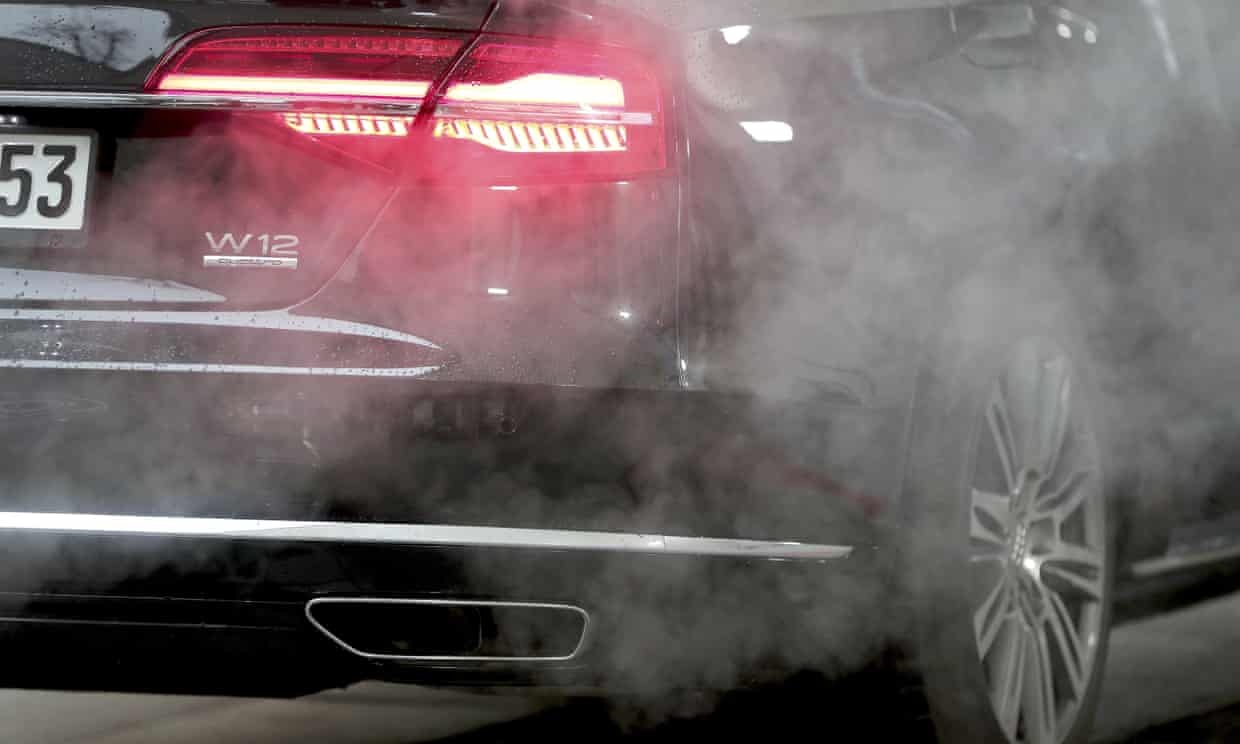
Luxury Audi car surrounded by exhaust gases as it is parked with a running engine in front of the Chancellery in Berlin, Germany
The Transport & Environment campaign group said the European Commission had reached its ‘very own Dieselgate moment’. Photograph: Michael Sohn/AP

Almost 100m highly polluting cars could appear on Europe’s roads over the next decade after the European Commission moved to disown its own experts efficiency recommendations in a leaked proposal seen by the Guardian.

About 70,000 premature deaths in 2018 were caused by road transport emissions, mostly nitrogen oxides (NOx) and particulate matter (PM), and the commission had been expected to tighten pollution limits in the next “Euro 7” regulation, which takes effect in 2025.

A “medium ambition” option which would save €136bn (£119bn) in net health and environmental costs was touted, based on recommendations by an EU consortium of experts called Clove.

However, the draft Euro 7 regulation only proposes bringing diesel emissions into line with those for petrol cars in the existing Euro 6 law, while petrol standards would remain unchanged.

Anna Krajinska, the vehicle emissions and air quality manager for the Transport & Environment (T&E) campaign group said that the commission had reached its “very own Dieselgate moment”.

“The tearing up of its own expert group advice is a scandal and completely undermines the tightening of pollution standards for cars and vans,” she said. “The auto industry lobby has fiercely opposed Euro 7, using a variety of dirty tricks to influence decision-makers. Now the commission has caved into their demands. Carmakers’ profits are being prioritised over the health of millions of Europeans.”

The auto industry lobbied the commission intensely in the run up to the draft regulation, with one Volkswagen official last year painting “a picture of horror” to EU officials of the effect that tough standards could have, according to Der Spiegel.

“Women would have to be afraid [when] in dark garages in the future; accident victims would have to wait, trembling, for the ambulance; police officers might arrive too late at the scene of the crime. And all this, because cars would have to warm up their exhaust gas purification systems before they could be allowed to start … ” the German newspaper reported.

A spokesperson for the European Automobile Manufacturers’ Association said: “The industry is calling for an approach that is not only effective in terms of results, but that is cost-beneficial, while also addressing the huge challenges of meeting future CO2 targets. Vehicle manufacturers are going full-course ahead with the goal of carbon neutrality – it would be counter-productive to take away investments from this.”

The Euro 7 emissions standard, due to be published on 9 November, had been planned for four years as a replacement to the Euro 6, which was set in 2014, before the Dieselgate scandal.

Under the anticipated medium ambition option, NOx emission limits would have been cut from 60 to 30mg a km, with particulate matter limits falling from 4.5 to 2mg/km, based on new emissions technologies.

The draft regulation, which is being considered by commissioners and could change, says that this option was proportionate, cost-efficient and “the most effective” for cutting air pollution.

But it would also have raised petrol vehicle prices by 0.8% and diesel vehicle prices by 2.2% and “in light of current geopolitical and economic circumstances” the commission has “readjusted” it to put less “pressure on the automotive supply chain”.

Consequently, T&E estimates that up to 100m vehicles manufactured to Euro 6 standards for petrol cars could still be on Europe’s roads in the 2040s, potentially with access to low-emissions zones.

“If they won’t improve the shockingly weak proposal for cars and vans, it should be scrapped entirely,” Krajinska said.

Since the Euro 6 was applied in 2013, NOx road emissions have fallen by 22% for cars and 36% for lorries and buses, the draft regulation says. Particulate matter emissions have also fallen by 28% for cars and vans, and 14% for lorries and buses.

Friday, 2 October 2020

A bit of micro - Carbon Pricing:

 Rachel Wolf is a partner in Public First. She had co-charge of the 2019 Conservative Manifesto. She was an education and innovation adviser at Number 10 during David Cameron’s premiership and was founding director of the New Schools Network.

Worrying about the state of the environment in the middle of a pandemic might feel like rearranging the deckchairs on the Titanic. Will the public question the Government’s sense of priorities if ministers start talking about how to protect the environment in the midst of a health crisis and a long potential downturn?

Actually, no. This week marked the first substantial policy intervention of the Prime Minister in months – a long awaited change to the education system that will make it easier for adults to retrain, and support more technical education. The rationale was clear: now, more than ever, we need to make sure people are trained for their next job.

The same argument can be made for the environment. The hard lockdown and the gentle recovery reminded people of two things: that everyday life is better for everyone when roads are quieter and the air is cleaner; and that economic growth is always precarious. That means we need to focus on industries and technologies of the future that will help maintain jobs and living standards.

In short, precisely because of their Covid-19 experience, the public have seen the importance of a practical, commercially-minded environmentalism.  That is fortunate, because there are some major choices to be made, and we are unprepared for them.

The target of Net Zero emissions by 2050 was passed into legislation with little public notice – most people still haven’t heard the term. There was also remarkably little Westminster debate: all the leadership candidates in 2019 signed up to the policy, so scrutiny was absent. Then, of course, the pandemic halted the entire domestic policy agenda. For this reason, we are still waiting to understand exactly what ending a 200-year dependence on fossil fuels really entails.

In my view, carbon pricing must form a large part of the answer.

As someone on the centre-right, I have always simultaneously applauded the aims and had great fears about the execution of Net Zero.

First, I worry it might upend too much. Our economy and lives are built off copious amounts of affordable energy. It is the main reason we were able to escape the destitution of the past. A life unimaginable to even the elite in the eighteentj century is now accessible to nearly all.

Therefore, any successful programme to reduce emissions must understand that people will not go backwards. Policies must work within the grain of people’s lives – not rewire them. We cannot be against trade; or consumption; or travel.  We just need ways to achieve all three without catastrophic environmental effects.

Second, I worry the plans rely on an implausible level of omniscience and competence from governments. We cannot engineer economies. We do not know exactly what innovations to support. We are likely to end up with endless unforeseen consequences and costs. We can encourage and support technology and invention; but prescribing what it should look like in 50 years time? That’s implausible.

It is for both of these reasons that I have spent much of the last six months working for an independent commission on how carbon pricing might practically, and technically, work.

To put it simply, possibly too simply, a carbon price requires those who produce, distribute, or use fossil fuels – or who produce greenhouse gas emissions in other ways – to make a payment for every tonne of greenhouse gases that enters our atmosphere.

In principle, the arguments for a carbon price are fairly obvious. It works with the grain of the market. It doesn’t make grand regulatory predictions about what will work, what we should do, or how exactly people ought to change their behaviour. It just prices in the ‘bad’ – in this case, emissions.

In practice, too, it has been effective. Electricity is the only area we have had a consistent approach to carbon pricing in the UK, and that is why electricity is the area where we have driven down emissions the most.  But electricity represents only a minority of our carbon emissions, and we now need a clear approach to the rest of the economy.

Carbon pricing also provides two things that we now – badly – need.

First, revenue. In some countries, carbon pricing is completely revenue neutral, and the money is distributed back to households. This deals with the challenges of the environment without leaving people worse off. But in others, it is used to support general government objectives – like funding the health service (or reducing the deficit).

If the Government needs to raise money, doing it in a way that will win public support and support environmental aims, without burdening businesses excessively, is a sensible way to do it. The other way to use revenue is to support transitions to cleaner energy alternatives and new green jobs – incentivising people away from carbon emissions, while supporting innovation.

Second, it provides certainty. A lot of the money for net zero should come from private investment. A fixed, clear price gives them the confidence to spend.

We already have some carbon pricing in the UK tax system. Unfortunately, it lacks transparency, is far too complicated and is piled sequentially on top of electricity bills. It has the bizarre consequence of actively encouraging people to move from electricity to gas – the opposite of what we want if we care about carbon emissions. Neither consumers nor suppliers have a clear idea of who is paying what and why.

Carbon pricing is not a silver bullet. I have oversimplified the changes necessary to reach Net Zero, and in our commission report we outlined a list of complementary policies required for different sectors to reach it. They recognise that the cost of reaching Net Zero is likely to be different for electricity, heating, industry and agriculture, and that the technologies are less mature for some sectors than others. Nor can it be too high: the economy is fragile, and business must be able to recover and grow. But the basic human principles remain – if there is a price, people will change their behaviour, and human ingenuity will always outstrip governments’.

We have been submerged in environmental rhetoric for years. Now the UK, alongside other countries with similar commitments, is having to make some real choices. Often, understandable fear of a public backlash has held them back – our research suggests there’s a credible way of gaining public consent and achieving our environmental aims: by having a clear price, credible alternatives for people to switch to, and cushioning so that no one is too badly affected. That is both deliverable and desirable, and it should form the core of the UK’s net zero roadmap.

Friday, 20 October 2017

Some microeconomics on de-merit goods

Looking for that extra-special conclusion? Have a look at how this article analyses the gains to the Treasury, as well as the costs, from smokers:

http://www.telegraph.co.uk/news/2017/10/18/comes-smokers-burden-nhs-may-contribute-tax-take/


T

he NHS has come under criticism after plans to ban patients from surgery unless they quit smoking were revealed. 
The logic behind the move is that smokers are a higher burden on the health service due to the illnesses that they pick up as a result of their own decision, but this clear-cut, utilitarian approach has come under fire.
It has been accused of going "against the principles of the NHS", but does it even make financial sense?
Many would argue that smokers contribute far more in tax than is needed to deal with the costs of their potential health issues - we've dug into the numbers to see if they add up. 
The tax contributions of smokers
Smokers are taxed a lot. In a 20-cigarette packet costing £7.35, some £5.37 of the cost goes to the tax man.
Per packet, they currently pay tobacco duty at a rate of 16.5 per cent of the retail price, as well as a further 'flat' element of £4.15.
The result of this is that the Government receives a lot of money from smokers, with FullFact's most recent research showing that they bring in about £12 billion in direct tax revenues.

But they also depend on the NHS a lot

The healthcare cost side is trickier to pin down, with estimates ranging from anywhere between £2 billion and £6 billion per year. 
According to the Action on Smoking and Health group, smoking costs the NHS in England approximately £2bn a year for treating diseases caused by smoking.
This cost includes hospital admissions, GP consultations and prescriptions - as well as any operations or treatment needed for smoking-related diseases.
This burden on hospitals, however, has been decreasing, with the proportion of disease-related hospital admissions attributable to smoking all down over the last decade.

And it isn't just the NHS

There are other smoking-related costs for the Government. Taxpayers fork out for things such as sweeping up cigarette butts off the streets, or for the fire brigade to put out fires caused by cigarettes.
When people are made ill from smoking, the country also misses out on lost productivity and tax revenue for the time that they aren't working. 
These costs are harder to quantify - although the think tank Policy Exchange made an attempt in 2010.
It estimated that the overall total for smoking-relating costs on the taxpayer was £14 billion - including an estimate of £2.7 billion for NHS costs.
This figure has come under criticism - not least of which because of its £2.9 billion price tag on people taking smoking breaks at work - but it goes some way to totalling all these individual costs on society.

People dying earlier from smoking could limit the health costs

Another thing to consider is the hypothetical scenario of what would happen if a smoker who died earlier actually didn't smoke, lived until they were 90, and racked up huge medical costs through an assortment of minor illnesses. 
People who die prematurely might actually have a smaller net burden on the health service in the longer term, reducing the state's spending on social care and pensions.
As FullFact's explains:
Imagine a patient in her 40s who is diagnosed with terminal cancer as a result of her smoking. Let's say her care costs the NHS £20,000 before she passes away. Now imagine we could go back in time and prevent her from taking up smoking in the first place. She might live into her 80s, and even if she spends that time in relatively good health is likely to require any number of GP consultations and routine prescriptions in that time.
If her treatment over these decades costs any more than £20,000 then actually the NHS would have spent less had she been a smoker.

So smokers may actually be paying for their habits

It's hard to say whether the two sides balance, and the numbers will of course vary from smoker to smoker - but it really isn't as clear-cut as some would have us believe.
When smokers buy their cigarettes, around four in every five pounds they spend is actually tax.
This means that Britain's 7.9 million smokers are contributing around £12 billion per year to the Government.
Our best estimates for their overall cost on society - whether that's NHS health costs, cleaning up cigarette butts or putting out cigarette-caused fires - is around £14 billion.
So the figures are relatively balanced, and this is before even accounting for other indirect benefits such as taxes from people employed in the tobacco industry.
Whatever the direct impacts on the health or culture of society, in terms of the murky world of financial costs and benefits, smokers may actually be paying for their habits.

Friday, 24 February 2017

Government failure, information failure, environmental failure:

Most wood energy schemes are a 'disaster' for climate change

  • 23 February 2017
woody biomassImage copyright Getty Images
Image caption There has been rapid growth in the use of wood chips and pellets for generating electricity
Using wood pellets to generate low-carbon electricity is a flawed policy that is speeding up not slowing down climate warming.

That's according to a new study which says wood is not carbon neutral and emissions from pellets are higher than coal.

Subsidies for biomass should be immediately reviewed, the author says.

Energy from trees has become a critical part of the renewable supply in many countries including the UK.

Critical role

While much of the discussion has focussed on wind and solar power, across Europe the biggest source of green energy is biomass.

It supplies around 65% of renewable power - usually electricity generated from burning wood pellets.
EU Governments, under pressure to meet tough carbon cutting targets, have been encouraging electricity producers to use more of this form of energy by providing substantial subsidies for biomass burning.

However this new assessment from Chatham House suggests that this policy is deeply flawed when it comes to cutting CO2.

According to the author, current regulations do not count the emissions from the burning of wood at all, assuming that they are balanced by the planting of new trees.
wood chipsImage copyright Getty Images
Image caption Wood chips and pellets are often burned used alongside coal in power plants
Duncan Brack, the independent environmental policy analyst who wrote the report, says this idea is not credible.

"It doesn't make sense," said Mr Brack, who is also a former special adviser at the UK Department of Energy and Climate Change.

"The fact that forests have grown over the previous 20 or 100 years means they are storing large amounts of carbon, you can't pretend it doesn't make an impact on the atmosphere if you cut them down and burn them."

"You could fix them in wood products or in furniture or you could burn them, but the impact on the climate is very different."

Mr Brack says the assumption of carbon neutrality misses out on some crucial issues, including the fact that young trees planted as replacements absorb and store less carbon than the ones that have been burned.

Another major problem is that under UN climate rules, emissions from trees are only counted when they are harvested.

However the US, Canada and Russia do not use this method of accounting so if wood pellets are imported from these countries into the EU, which doesn't count emissions from burning, the carbon simply goes "missing".

Burning wood pellets can release more carbon than fossil fuels like coal per unit of energy, over their full life cycle, the author argues.

Often the products have to travel long distances increasing the emissions associated with their production and transport.
pelletsImage copyright Southern Environmental Law Center
Image caption The map shows the concentration of wood pellet plants in the south eastern US exporting to Europe
Within the EU, the UK is the biggest importer of wood pellets for heat and power, with some 7.5m tonnes shipped from the US and Canada in 2015-16. Most of these imports comes from the southeast US, where there are growing concerns about the trade.

"This report confirms once again that cutting down trees and burning them as wood pellets in power plants is a disaster for climate policy, not a solution," said David Carr, General Counsel of the Southern Environmental Law Centre in the US.

"Forests in our region, the southeast US, are being clear cut to provide wood pellets for UK power plants. The process takes the carbon stored in the forest and puts it directly into the atmosphere via the smokestack at a time when carbon pollution reductions are sorely needed."

Within Europe the push for pellets is also providing incentives for the forest industry to plant more and harvest more trees. Environmentalists are worried that the system is creating a cycle that can't keep up with itself.

"If you keep increasing your harvest over a period of time you will never be able to recoup your emissions from burning that growth, you will never catch up with yourself," said Linde Zuidema from Fern.

"They are shooting themselves in the foot, they are not taking into account that increased harvesting of trees will actually have an impact on the role that forests play as a carbon sink."

The new study also highlights concerns over the use of BECCS - bio-energy with carbon capture and storage.

Scientists, including the Intergovernmental Panel on Climate Change (IPCC), have suggested that this system could be used to suck carbon from the atmosphere to keep the world from dangerous levels of warming.

"It's really worrying," said Duncan Brack. "The number of scenarios that the IPCC reviewed that rely on BECCS for ambitious climate change targets, it's crazy, I'm not the only person who's said that."

Concern is growing about the continued use of wooden pellets and chips for electric power. The EU has proposed a new system for biomass under its revised Renewable Energy Directive.

Duncan Brack says it's a good opportunity to review the current methods of giving subsidies for the use of wood energy across Europe. The use of saw mill waste should be encouraged - but the burning of pellets should be curtailed.

"The simplest way is to limit support to those type of biomass that really represent genuine carbon savings, primarily sawmill waste and post-consumer wood waste," said Duncan Brack. "I would rather see support for forest industry, not forest energy."

Follow Matt on Twitter and on Facebook.

Sunday, 19 February 2017

Alcohol & tax reform - 2 topics in one:


·      Excessive drinking creates costs to public services which the government can recoup through alcohol taxes, thereby making drinkers internalise the costs.

·      However, in Britain, the alcohol duty regime is excessive and illogical. Not only do revenues from alcohol duty far exceed the costs to public services, but units of alcohol are taxed at dramatically different rates depending on what type of drink they are in. The tax on a unit of alcohol ranges from 7p to 34p.

·      A flat rate of 9p on every unit of alcohol sold would raise approximately £4.6 billion (at current rates of consumption), totally off-setting the external costs of drinking to public services. Alcohol would continue to earn the government additional revenue in the form of VAT on the product, VAT on the duty, and other taxation on the alcohol and hospitality industry.

·      A 9p/unit tax would pay for all the costs incurred to public services by alcohol abuse and would incentivise the development of lower strength drinks across the board. It would also effectively create a minimum unit price of 11p (including VAT on the duty). Alcohol duty evasion, currently valued at £1.8 billion per annum, would likely fall as a result of the lower price of beer, wine and spirits.

·      A 9p/unit tax would ensure that alcohol duty is a tax on alcohol, not an arbitrary tax on fluids. EU regulation currently prohibits this system of alcohol taxation. Outside of the EU, Britain will no longer be constrained.