Quote of the day

“I find economics increasingly satisfactory, and I think I am rather good at it.”– John Maynard Keynes

Wednesday, 10 June 2020

Central banks and monetary response to the pandemic

Ludwig von Mises was the founder of the Austrian school of economic theory. To understand this article, first know that Austrian economics is one of the most free market-led theories, and second, the Austrian view is that as interest rates are the price of money, markets (i.e. supply and demand) should determine interest rates. There are some absolute gems in this piece:

Central Bankers Gone Wild: It's a New Era at the Fed

TAGS Booms and BustsMonetary PolicyTaxes and Spending

Editor's Note: We keep hearing from the Fed's defenders that the current spate of new stimulus and bailouts from the central bank are really not a big deal and are all very prudent and moderate. I asked Senior Fellow Bob Murphy to provide some much needed perspective.

Ryan McMaken: We’re in a very odd situation right now in terms of evaluating the state of the economy. We can see that there is rising unemployment, and there is likely to be a wave of missed mortgage and rent payments. Is this all just due to the government-mandated “shutdowns” or are there deeper economic issues here?

Robert P. Murphy: In economics there are no controlled experiments, so partisans on a policy dispute can both continue to claim that the evidence is on their side. That’s why Keynesians and Austrians still disagree about the “lessons” of the 1930s, or whether the Obama stimulus package created or destroyed jobs.

During the present economic crisis, I am firmly in the camp that it was not due merely to the coronavirus or even to the (counterproductive) coercive lockdowns that various governments instituted, ostensibly as a public health response. I agree with Jeff Deist, who argued back in April that “The supposed greatest economy in US history actually was a walking sick man, made comfortable with painkillers, and looking far better than he felt—yet ultimately fragile and infirm. The coronavirus pandemic simply exposed the underlying sickness of the US economy. If anything, the crash was overdue.”

What evidence can we marshal to support such a perspective? Well, I have been far from flawless in my economic prognostications, but back in October 2007 I did write an article for Mises.org, worrying that the US could be in store for the worst recession in twenty-five years—this was almost a full year before the actual crash in the fall of 2008. And in that article I wasn’t throwing darts at a GDP chart; instead I used Austrian business cycle theory to gauge the extent of Fed distortions in the financial system.

Now, if I then made a good prediction in real time based on Austrian theory and Greenspan’s artificially low interest rates, that gives me confidence that the Fed’s post-2008 rounds of QE (quantitative easing) and seven full years of virtually zero percent interest rates quite clearly drove the booming stock market under Obama, yet set us up for a much bigger crash.

Even non-Austrians had enough information to know to worry. Back in September of 2019, I explained how the inverted yield curve signaled an impending recession for the summer of 2020—i.e., right now.

RM: As the crisis grew during March, the Fed lowered the target rate from 1.75 to 0.25 percent in a two-week period. That’s a big drop. What was the Fed trying to do when it did this, and can it achieve its goals?

RPM: I think regular Americans would be shocked if they realized just how crude the basic models are that guide central banking policy. I’m simplifying somewhat, but the official rationale was that a weak/panicked economy needs more spending in order to maintain employment, and the way you goose spending is to lower interest rates. There’s also the notion that the markets want reassurance that the Fed is waiting to help, and so by taking a “bold” move quickly, the Fed could possibly nip a self-fulfilling prophecy in the bud.

Having said all of that, it’s possible that behind the scenes the real reason the Fed did what it did was that certain powerful players were caught with their pants down, and they needed cheap loans to salvage their positions.

I don’t think this was a wise move, and no, it won’t (in the long run) help the financial sector or the broader economy. In the Austrian view, interest rates aren’t merely a gas pedal/brake for spending; they help coordinate long-term plans made by consumers and businesses. So if the Fed pushes interest rates below the correct market level corresponding to genuine saving decisions and the state of the economy, then it will foster an unsustainable structure of production. This was Ludwig von Mises's theory of the business cycle, which has yet to be appreciated by most other free market economists—let alone the Keynesians.

RM: Many commentators on the Fed’s stimulus packages have claimed that it’s not really that big a deal because the Fed is only exchanging liquidity for collateral, and Fed stimulus is mostly just loans that will be paid back anyway. So is this just much ado about nothing?

RPM: Back when the Fed’s “extraordinary” injections of liquidity started, I argued that this nonchalance was wrong. Look, if the Fed wrote me a check for my Nissan Sentra for $100,000, then on the moment of sale my car would have a “market value” of $100,000 and the Fed would just be adding equal amounts to its assets and liabilities. Yet that clearly would bail me out, even though it would appear to be a mere “asset swap” rather than a transfer payment.

Put it this way: If the Fed’s injections of “liquidity” don’t really help the fat cats in the financial sector, then we can just cancel them and won’t affect anybody, right?

RM: We seem to now be in a time of unprecedented fiscal and monetary stimulus. In the past, there seemed to be some political and legal limits on what could be done in this regard. Why do you think there are now almost no limits on what the Fed and Congress can get away with in terms of spending and bailouts?

RPM: In an essay I wrote for a collection edited by David Howden and Joe Salerno, I argued that Ben Bernanke was “the FDR of central bankers.” What I meant was the Bernanke took the economic crisis and used it as an opportunity to fundamentally expand what Americans perceived as the proper role of the Federal Reserve. It wasn’t merely that Bernanke doubled the holdings of the Fed in mere months, but that the type of assets the Fed bought or lent against was greatly expanded.

To appreciate just how dubious these moves were, realize that the Fed back in 2008 created “Maiden Lane” LLCs, which were intermediate companies that would get loans from the Fed, then go out and buy mortgage-backed securities (MBS). Since the Fed didn’t have the statutory authority to buy MBS, they could say, “We’re not buying these forbidden assets, we’re just lending money to Maiden Lane LLC. We have the ability to lend money to whichever institution we want. Now if Maiden Lane LLC takes the money and goes and buys some mortgage-backed securities, that’s their business…” So, to reiterate, it’s not just that Bernanke’s Fed did things that were bad policies. They were also arguably illegal.

We see a similar phenomenon with Jay Powell and the coronavirus panic. When people are scared they let the authorities get away with all sorts of nonsense. The Fed got rid of reserve requirements in the last section of an addendum to the main press release of a surprise Sunday night meeting, and barely anybody even covered it.

Likewise with fiscal policy. Apparently the folks who brought us the Obama stimulus package were afraid of having its price tag exceed $1 trillion, but that’s obviously not stopping anybody now. The American people have been so desensitized to these gigantic numbers that nothing is shocking. But for what it’s worth, the CBO (Congressional Budget Office) itself is now saying that federal debt held by the public—as a share of the economy—will break 101 percent by October.

I think the only thing that will reinstill a sense of discipline is if there is a tangible and immediate reaction to these crazy policies. If a Fed announcement of more asset purchases causes the dollar to fall 20 percent against other currencies, or if the projection of another $1 trillion deficit causes Treasury rates to spike, then maybe Americans will stop looking to Washington as a magic source of financing.

Thursday, 4 June 2020

Just an interesting article, which should cause economists to pause and think:

The boss who put everyone on 70K

Dan PriceImage copyrightGRAVITY

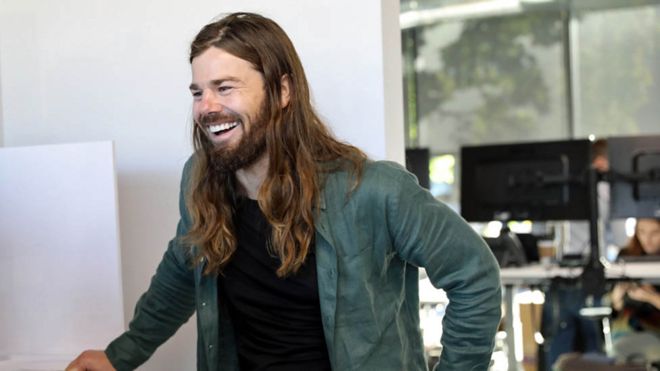
In 2015, the boss of a card payments company in Seattle introduced a $70,000 minimum salary for all of his 120 staff - and personally took a pay cut of $1m. Five years later he's still on the minimum salary, and says the gamble has paid off.

Dan Price was hiking with his friend Valerie in the Cascade mountains that loom majestically over Seattle, when he had an uncomfortable revelation.

As they walked, she told him that her life was in chaos, that her landlord had put her monthly rent up by $200 and she was struggling to pay her bills.

It made Price angry. Valerie, who he had once dated, had served for 11 years in the military, doing two tours in Iraq, and was now working 50 hours a week in two jobs to make ends meet.

"She is somebody for whom service, honour and hard work just defines who she is as a person," he says.

Even though she was earning around $40,000 a year, in Seattle that wasn't enough to afford a decent home. He was angry that the world had become such an unequal place. And suddenly it struck him that he was part of the problem.

At 31, Price was a millionaire. His company, Gravity Payments, which he set up in his teens, had about 2,000 customers and an estimated worth of millions of dollars. Though he was earning $1.1m a year, Valerie brought home to him that a lot of his staff must be struggling - and he decided to change that.

Short presentational grey line

Raised in deeply Christian, rural Idaho, Dan Price is upbeat and positive, generous in his praise of others and impeccably polite, but he has become a crusader against inequality in the US.

"People are starving or being laid off or being taken advantage of, so that somebody can have a penthouse at the top of a tower in New York with gold chairs.

"We're glorifying greed all the time as a society, in our culture. And, you know, the Forbes list is the worst example - 'Bill Gates has passed Jeff Bezos as the richest man.' Who cares!?"

Dan PriceImage copyrightGRAVITY

Before 1995 the poorest half of the population of the United States earned a greater share of national wealth than the richest 1%, he points out. But that year the tables turned - the top 1% earned more than the bottom 50%. And the gap is continuing to widen.

In 1965, CEOs in the US earned 20 times more than the average worker but by 2015 it had risen to 300 times (in the UK, the bosses of FTSE 100 companies now earn 117 times the salary of their average worker).

Breathing in the crisp mountain air as he hiked with Valerie, Price had an idea. He had read a study by the Nobel prize-winning economists Daniel Kahneman and Angus Deaton, looking at how much money an American needs to be happy. He immediately promised Valerie he would significantly raise the minimum salary at Gravity.

After crunching the numbers, he arrived at the figure of $70,000. He realised that he would not only have to slash his salary, but also mortgage his two houses and give up his stocks and savings. He gathered his staff together and gave them the news.

He'd expected scenes of celebration, but at first the announcement floated down upon the room in something of an anti-climax, Price says. He had to repeat himself before the enormity of what was happening landed.

Five years later, Dan laughs about the fact that he missed a key point in the Princeton professors' research. The amount they estimated people need to be happy was $75,000.

Still, a third of those working at the company would have their salaries doubled immediately.

Short presentational grey line

Since then, Gravity has transformed.

The headcount has doubled and the value of payments that the company processes has gone from $3.8bn a year to $10.2bn.

But there are other metrics that Price is more proud of.

"Before the $70,000 minimum wage, we were having between zero and two babies born per year amongst the team," he says.

"And since the announcement - and it's been only about four-and-a-half years - we've had more than 40 babies."

Dan Price with his motherImage copyrightGRAVITY
Image captionDan Price with his mother

More than 10% of the company have been able to buy their own home, in one of the US's most expensive cities for renters. Before the figure was less than 1%.

"There was a little bit of concern amongst pontificators out there that people would squander any gains that they would have. And we've really seen the opposite," Price says.

The amount of money that employees are voluntarily putting into their own pension funds has more than doubled and 70% of employees say they've paid off debt.

But Price did get a lot of flak. Along with hundreds of letters of support, and magazine covers labelling him "America's best boss", many of Gravity's own customers wrote handwritten letters objecting to what they saw as a political statement.

At the time, Seattle was debating an increase to the minimum wage to $15, making it the highest in the US at the time. Small business owners were fighting it, claiming they would go out of business.

The right-wing radio pundit, Rush Limbaugh, whom Price had listened to every day in his childhood, called him a communist.

"I hope this company is a case study in MBA programmes on how socialism does not work, because it's going to fail," he said.

Two senior Gravity employees also resigned in protest. They weren't happy that the salaries of junior staff had jumped overnight, and argued that it would make them lazy, and the company uncompetitive.

This hasn't happened.

Rosita BarlowImage copyrightGRAVITY
Image captionRosita Barlow

Rosita Barlow, director of sales at Gravity, says that since salaries were raised junior colleagues have been pulling more weight.

"When money is not at the forefront of your mind when you're doing your job, it allows you to be more passionate about what motivates you," she says.

Senior staff have found their workload reduced. They're under less pressure and can do things like take all of the holiday leave to which they are entitled.

Price tells the story about one staff member who works in Gravity's call centre.

"He was commuting over an hour and a half a day," he says. "He was worried that during his commute he was going to blow out a tyre and not have enough money to fix that tyre. He was stressing about it every day."

When his salary was raised to $70,000 this man moved closer to the office, now he spends more money on his health, he exercises every day and eats more healthily.

"We had another gentleman on a similar team and he literally lost more than 50lb (22kg)," he says. Others report spending more time with their families or helping their parents pay off debt.

"We saw, every day, the effects of giving somebody freedom," Price says.

He thinks it is why Gravity is making more money than ever.

Raising salaries didn't change people's motivation - he says staff were already motivated to work hard - but it increased what he calls their capability.

"You're not thinking I have to go to work because I have to make money," Rosita Barlow agrees. "Now it's become focused on 'How do I do good work?'"

Thursday, 28 May 2020

A very basic dilemma in economics

If you understand the dilemma outlined in this piece you can use it to inform your essays, micro and macro. There are no easy answers, so showing you understand that is absolutely key in any 25 mark answer:

Are we back  on the road  to serfdom?


The coronavirus crisis has led to levels of state intervention unprecedented in peace time. The Austrian School reminds us of the dangers, say Dan Greenwood and Stuart Watkins

This year marks the centenary of the publication of “Economic Calculation in the Socialist Commonwealth”, an essay by Ludwig von Mises that began the so-called “socialist calculation debate”, a fundamentally important, long-standing argument among scholars of economics and politics about whether socialism is possible. 

That might sound rather arcane and indeed the debate remains barely known outside of academia and political circles of the radical left and libertarian right. Given that the debate was especially concerned with the feasibility of a global communist system that had abolished trade and money, you may wonder what relevance it can possibly have given that few advocates of socialism or social democracy these days envisage the kind of centrally planned, entirely non-market communism sought by the Bolsheviks and stringently critiqued by Mises and his fellow Austrian School economist Friedrich Hayek. A closer look at Mises’ arguments, however, reveals that they remain pertinent. In the 1945 election, Winston Churchill famously paraphrased Hayek’s The Road to Serfdom and worried about the consequences of electing a Labour government committed to socialising the economy. Today in the wake of the coronavirus crisis, which has seen a massively expanded role for the state, we would do well to remind ourselves of these arguments.

WHY SOCIALISM DOESN’T WORK

Mises and Hayek were classical liberals who believed that the state should have a strictly circumscribed role – primarily that of enforcing private property rights, supplying a minimal range of public goods, as well as minimal welfare provision only for those in most severe need – in a broader context of private ownership and free markets. Socialists and social democrats today, while not necessarily advocating full communism instead, would see the last 100 years as providing strong grounds for challenging the wisdom of this. 

Inequalities of wealth and income, severe economic crises and ecological destruction would seem to challenge the idea that such a system inevitably leads to the best of all possible worlds. The profundity of market failures and the vital importance of public goods that cannot be provided through the market alone is widely recognised, not least in the current public-health crisis. The rapidity with which the state had to step in and take control of everything from the railways to paying workers’ wages in the wake of the spread of the coronavirus would seem to have placed the Austrian case for markets under significant strain.

“THE CASE FOR CLASSICAL LIBERALISM IS BASED UPON SOME DEEP AND COMPELLING ARGUMENTS” 

Yet as the economic calculation debate of 100 years ago highlighted, the case for classical liberalism is based upon some deep and compelling arguments, the force of which has been underestimated by the left. They need to be kept in mind even at a time when there is a strong imperative for state intervention and planning in the heat of a crisis.

Mises and Hayek saw their scholarly role in terms of developing ideas that would percolate through society. Their ideas, which evolved in the course of the calculation debate, did indeed pass into our everyday understanding of markets as indispensable drivers of economic efficiency and innovation. We are used to hearing these arguments rehearsed when politicians pursue the privatisation of industries, for example, or hear them deployed against those who seek nationalisation. Alongside this more familiar case for markets, the Austrians developed a stringent critique of central planning and more generally of state intervention to achieve social goals.

Perhaps the more familiar aspect of that critique has to do with incentives – that only market processes can reliably establish the incentives required for achieving economic efficiency. We can rely on entrepreneurs to solve problems for us as they are motivated to act by the prospect of profit and are spurred on to greater heights by competition. We can rely on the world’s workers getting out of bed on time if the monetary reward is sufficient. A non-market, planned economy would lack such incentives, the argument goes. 

This idea gained prominence with the rise of “public choice theory”, which assumes that political actors, like economic ones, are self-interested individuals acting rationally to maximise satisfaction. This model seemed to explain well at least some of the failures we have come to associate with government control, such as corruption and inefficiencies. Mises and Hayek, however, writing at a time of large-scale socialist movements and indeed revolution, recognised the need to avoid relying entirely upon this argument. What if people with non-monetary incentives and impeccable intentions were in charge, say? Mises and Hayek’s claim was stronger – that attempts to plan an economy without markets, however well-intentioned and motivated the planners might be, would inevitably fail due to the complexity of modern economies. 

THE KNOWLEDGE PROBLEM

As Hayek in particular emphasised, the fundamental problem for a socialist economy concerns knowledge. The highly decentralised market process of exchange and price generation captures and communicates a vast amount of dynamically changing knowledge, responding to highly complex and ever-changing demand and supply levels and reflecting the locally situated goals and decisions of individuals across society. By contrast, state planning, even at a local scale and most certainly at national and international level, necessarily involves an element of centralisation. Attempting to achieve coordination of knowledge of the kind facilitated by markets is a profound problem for non-market planning. Decision-making is more susceptible to unforeseen consequences and failures to capture important local knowledge and expert insights. Hayek’s view of the inevitable error and arbitrariness of state interventions being a road to dictatorship and serfdom may be exaggerated, as many critics have argued. But his articulation of this “epistemological” challenge raises questions of vital relevance to contemporary governance where the aim is to shape market outcomes rather than remove markets entirely. 

Hayek’s philosophical approach challenges the rationalistic presumption, evident across the political spectrum, that politicians can straightforwardly access technocratically defined solutions to social problems. Such assumptions may now be more widespread than ever, explaining, at least in part, current scepticism about politicians as they inevitably fail to deliver what they imagine and promise they can achieve. Austrian scepticism was not a postmodernist rejection of the potential for social progress, but rather a call to recognise the need for a political economy that fosters processes of knowledge discovery and innovation in the face of complexity and uncertainty.

Anthony Giddens’ famous vision of the “third way” tried to marry Hayek’s insights with social-democratic ambitions to correct for perceived market failures. New Labour’s programme aimed to put those ideas into practice, promoting state engagement with the private and third sectors in an effort to overcome Hayek’s epistemological challenge. Where markets could not solve social and economic problems of society, ways were tried to mimic market competition. Yet this entailed some new, often problematic forms of technocracy. Performance measures and targets were imposed in a range of fields, from health and education to climate-change mitigation and social care. These were, as we now appreciate all too well, far from a complete success, to say the least. As Hayek warned, performance measures established outside of the market run the risk of failing adequately to capture public value, leading to unintended consequences.

“IN ALL BUT THE MOST UNLIKELY SCENARIOS, MONEY AND MARKETS WILL CONTINUE TO PLAY AN IMPORTANT ROLE”

New Labour’s performance measures created perverse incentives and led to the gaming of targets – for example, schools manipulated exam results to meet their targets; ambulance drivers delayed patients’ entry to A&E to keep within maximum waiting limits once inside; police priorities were skewed to focus on the crimes most easily solved. The response to such failings, some of which have persisted or taken new forms under the Conservatives, need not be sceptical rejection of targets as such, however, but might instead be a search for new, smarter forms of intervention – ones that appreciate and seek to respond to Hayek’s insights. 

The challenges states face today of protecting public health, promoting ecological sustainability and stabilising the climate are unprecedented. Profound inequalities remain entrenched. But just how can state capacity be improved and the failings of markets  corrected for, in the face of complexity? The Austrians’ philosophical perspective cautions us against simplistic assumptions that introducing any particular set of targets or regulations will be the answer. Fundamental threats to human life and security in the coronavirus crisis create the need for public goods, but delivering them requires a careful balancing of profoundly difficult trade-offs and uncertainties that we hear about every day, and which are not entirely measurable either by money or any other quantitative measure. Mises and Hayek are famous as advocates of free markets, but their arguments were founded on a fundamental recognition of the profound limitations of any form of decision-making, market or otherwise, in the face of the countless, continually changing array of individual priorities and economic choices across society.

AN OPEN QUESTION

None of this is to dismiss the case for state intervention in some circumstances. But the question of the most suitable forms of intervention in different contexts is best viewed as inevitably an open one. Politicians go wrong when they see their task as being to promise and then deliver pre-given solutions, rather than constructing frameworks within which socially dispersed knowledge can be discovered, captured and put to use. The Corbyn Labour party, for example, was quick to advocate specific kinds of state intervention as the solution to social problems, but reflection on the complexities involved and the dangers inherent in central planning had seemingly vanished entirely. 

Mises’ century-old challenge should spur a rethink about how states can effectively achieve goals that will not be secured by markets. Latter-day Lenins may be sad to learn that, in all but the most adventurous and unlikely scenarios, money and markets, or something very like them, will continue to play an important role. We can all gain from reflecting on the reasons why. 

Dr Dan Greenwood is Reader in Politics at the University of Westminster. His book, Effective governance: complexity, coordination and discovery, is published by Palgrave early next year

MONEYWEEK

Thursday, 16 April 2020

What will post-Covid trade look like?

OPINION

Covid-19 will end the post-1945 era of globalisation

WORLD WAR I BROUGHT VICTORIAN FREE TRADE TO A SHUDDERING HALT

The coronavirus is accelerating the ongoing shift towards protectionism and autarky, says Edward Chancellor

Past cycles of globalisation have been vulnerable to sudden shocks. World War I brought the Victorian free-trade era to a shuddering halt. The 1929 crash led to beggar-thy-neighbour tariffs. The financial crisis in 2008 damaged faith in globalisation. The Covid-19 pandemic could well prove a harder blow.
Protectionist pressures tend to increase when growth weakens. In 2015 restrictions affected a greater share of world trade than in the 1930s, according to Global Trade Alert, and world trade volumes started to decline. Since the advent of President Donald Trump in 2017, thousands of new trade distortions have been introduced.
The US-China tariff war accounts for less than a quarter of recent anti-trade measures, estimates Simon Evenett, professor of International Trade and Economic Development at Switzerland’s University of St. Gallen. Still, Trump’s preference for conducting policy on Twitter took a toll. Last October, the International Monetary Fund warned that jitters over trade policy were dampening global growth prospects. It was at this critical juncture that Covid-19 emerged.
The pandemic has exposed the fragility of cross-border supply chains. Producers have used cheap dollar funding for trade credit to lengthen their supply chains, often incorporating several countries. These chains are cost-efficient but vulnerable. When Beijing tried to halt the spread of the epidemic in January, many Chinese factories were shut.
Apple had problems sourcing parts for its iPhones. It soon became clear that many Western firms lacked an adequate understanding of their supply chains. Global trade links suddenly appeared as complex, interconnected and vulnerable to shocks as the financial world when the subprime crisis emerged.
SICKEN-THY-NEIGHBOUR 
Covid-19’s threat to world trade took a more insidious turn last month. In January, Beijing stopped the export of certain medical supplies, such as face masks, including those produced by foreign manufacturers. As the virus spread across Europe, export restrictions proliferated. Since 1 January more than 50 governments have imposed exports curbs on medical supplies. Germany stopped the export of 240,000 masks to Switzerland. France prevented Valmy from fulfilling its contract with Britain’s health service to supply millions of masks.
“FRANCE PREVENTED VALMY FROM FULFILLING ITS CONTRACT WITH THE NHS TO SUPPLY MILLIONS OF MASKS”
India, a major producer of generic medicines, imposed a range of export restrictions on medical supplies and drugs, including fever-reducer paracetamol. The European Union, which produces half the world’s ventilators, restricted their export.
Beggar-thy-neighbour trade policies have become sicken-thy-neighbour, says St. Gallen’s Evenett.
Panicked reactions to the pandemic bring short-term relief at lasting cost. Companies may be reluctant to invest for export markets if those markets are shut off at whim. Export bans also foster bitterness between trading partners. Deprived of medical supplies from Germany, Italy and Serbia turned to China for relief. Medical export restrictions succour nationalists who argue in favour of self-sufficiency in manufacturing. White House trade adviser Peter Navarro says US dependence on China for key medical supplies and drugs is a “wake-up call”.
What might the world look like when the pandemic passes? For a start, supply chains are likely to become shorter and more robust. Cross-border manufacturing will take on a geopolitical aspect as managers question whether production is located in trusted countries. Moves to repatriate manufacturing, especially in healthcare, will receive fresh impetus. The age of multinational oligopolies is ending. Takeover authorities will pay less attention to consumer prices when considering mergers and more to issues such as competition and security. If China becomes the scapegoat for the pandemic, as is likely, it can no longer serve as the workshop of the world.
Some of the macroeconomic consequences that follow a turn in the globalisation cycle are foreseeable. The disinflationary forces unleashed by the era of free trade will come to an end. When trading links frayed at the close of the 19th century, the great Victorian bond bull market came to an end. The current bond bull market, nearly four decades old, will be replaced by a multiyear bear market. As interest rates rise, a higher discount rate will be applied to stocks and houses, both of which will trade in future at lower valuations. Manufacturers will no longer be able to outsource manufacturing to the cheapest geographies, so costs will rise. Profits will decline and labour’s share of national income will rise.
The geopolitical consequences of an end to globalisation are more fraught. As the history of the 1930s shows, the struggle for raw materials in a multipolar world can become a casus belli. For years, Beijing has been pursuing a 1930s-style autarky, tying up supplies of commodities from various countries, such as Venezuela, with loans from the China Development Bank. More recently, Beijing’s Belt and Road Initiative has increased its number of client states. At the same time, the People’s Republic has reduced the share of foreign components in domestic manufacturing. China may unwittingly have provided the catalyst for this crisis, but if globalisation fails it will enjoy a head start.
A version of this article was first published on Breakingviews. Edward Chancellor is a financial historian, journalist and investment strategist.