Quote of the day

“I find economics increasingly satisfactory, and I think I am rather good at it.”– John Maynard Keynes
Showing posts with label India. Show all posts

Thursday, 23 May 2024

Thinking about the work we did on innovation...


MAY 23RD 2024

Monday, 12 September 2022

India overtakes UK to become the 5th biggest economy

 This is a typical one-sided article - it tells you everything good but makes no mention of obstacles. Last week's Moneyweek does, so if you want a contrasting view go look it up:

India is quietly laying claim to economic superpower status

The rise of China has been the biggest story in the global economy in recent decades.
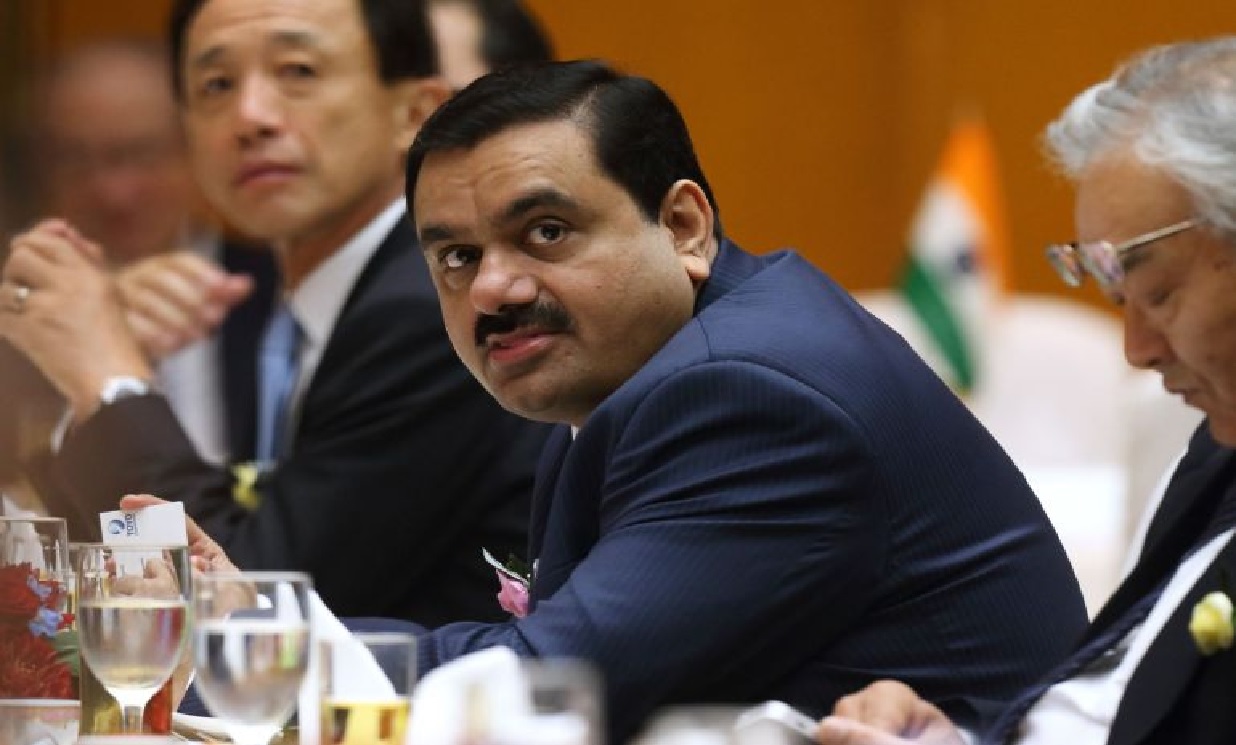
The rise of China has been the biggest story in the global economy in recent decades. But amid concern about its stumbling property market and global fears about inflation, the emergence of its neighbour, India, as a potential new economic superpower may be going under the radar.

You won’t find mention of it in Liz Truss’s blueprint for a “modern brilliant Britain”, but the UK has just been overtaken by India as the world’s fifth biggest economy. The nation of 1.4 billion people is on track to move into third place behind the US and China by 2030, according to economists.

And while the world became familiar with Chinese business titans such as Alibaba founder Jack Ma, the staggering wealth accumulated in recent years by Indian billionaires Gautam Adani and Mukesh Ambani has been less well publicised.

Adani, in particular, has come to represent India’s growing economic strength thanks to the rapid expansion of his Adani Group conglomerate, which covers everything from ports to airports, and solar power to television. Having entered the global Top 10 when he became Asia’s richest person in February, he is now ranked third with a fortune of $143bn (£123bn) and is closing fast on second-placed Amazon boss Jeff Bezos.

India was for many years seen as the poor relation to China, held back by a sclerotic, sprawling state sector and labyrinthine bureaucracy. It still has enormous problems of poverty and poor infrastructure, but it is beginning to emerge as a rival to its large neighbour with the kind of economic growth figures that were once the pride of Beijing.

Gross domestic product (GDP) grew by 13.8% in the second quarter of this year as pandemic controls were lifted and manufacturing and services boomed. Although double-digit growth is unlikely to be repeated in subsequent quarters, India is still on track to expand by 7% this year as it benefits from economic liberalisation in the private sector, a rapidly growing working population, and the realignment of global supply chains away from China.

“India has overtaken the UK to become the world’s fifth-largest economy,” says Shilan Shah, senior India economist at the consultancy Capital Economics, citing recent updated figures from the International Monetary Fund. “Looking ahead, India looks set to continue its march up the global rankings. In all, we think India will overtake Germany and Japan to become the third-largest economy in the world within the next decade.”

A key part of India’s continued rise will be its ability to grow its manufacturing sector and challenge China as the world’s No 1 exporter. India has already benefited from a large, well-educated, often English-speaking middle-class, helping the country to develop world-class IT and pharmaceutical sectors. It also has strong consumer demand, which accounts for about 55% of the economy compared with less than 40% in China.

Now the trick will be to benefit from its youthful working population to position itself as a manufacturing power to rival China, where an ageing labour force and rising pay levels are reducing its competitive edge. With a geopolitical wedge opening up between China and the west, India also has the opportunity to grow in reshaped international supply chains.

Nguyen Trinh, emerging markets economist at Natixis bank in Hong Kong, says the outlook is promising for India if it can keep investing.

“Indian demand is expected to be strong due to its demographics,” she says, “which is rather favourable with rising working-age population that will push for demand for essentials such as food and energy as well as infrastructure investment. The normalisation of activities post-Covid as well as an increase in government spending, particularly in infrastructure investment, is helping growth. Consumption rose in double digits and investment is accelerating.”

As with many aspects of India’s economic rise, Adani’s story is instructive. Now 60, the billionaire dropped out of Gujarat University, moved to Mumbai, and began trading diamonds before expanding into ports, construction and – latterly, but very profitably – renewable energy.

These widespread industrial interests have dovetailed perfectly with the country’s thirst for growth and seen his Adani Group holdings on the Indian stock market rocket in value. His main listed company, Adani Enterprises, has grown 50-fold in value in the past five years, while Adani Green Energy, which looks after its push into solar power, has doubled in value in the past year. The group is ploughing $70bn into green energy projects by 2030 with the aim of becoming the world’s largest renewable-energy producer – ironic given the controversy over its plans to expand coal mining in Australia.

Another important symmetry comes from Adani’s origins in the western state of Gujarat, which is also the power base of the Indian prime minister, Narendra Modi. Modi’s market reforms, which have included cutting corporation tax from 35% to 25% and opening up India to more foreign investment, have freed up entrepreneurs such as Adani and the man he overtook as the country’s richest person, Mukesh Ambani, head of Reliance Industries, and another Gujarati. Adani is close to Modi who has been known to use the tycoon’s private jet for campaign trips.

Nowhere is the local and global ambition of Adani more clearly illustrated than in Mundra, the Arabian Sea port which he wants to become the world’s largest by the end of the decade. With Modi’s government rolling out a 100tn rupees ($1.35bn, £1.1tn) infrastructure programme – it aims to build 25,000km of new roads in the current financial year alone – Adani is well placed to profit at every stage as the necessary raw materials are shipped in, turned into goods and services, and then sent back out around the world through Mundra.

This article was written by Martin Farrer from The Guardian and was legally licensed through the Industry Dive Content Marketplace.

Tuesday, 19 September 2017

In light of our HS2 conversation...

Read this quick comentary:

India: the "almost-perfect" emerging-market investment story
 
Want to ride on a Shinkansen? Of course you do. Everyone wants to ride on a bullet train. But unless you get to Japan at some point in the next few years, you might find that most of India rides on one before you do.
This week, Japan’s prime minister Shinzo Abe headed to India to lay the first stone in a Japanese-financed $17bn bullet train project set to cover the 310 miles between Mumbai and the industrial city of Ahmedabad. This is exciting stuff. That’s partly because bullet trains are amazing in themselves – this one will cut the journey time from eight hours to under three.
It is partly because the Japanese have offered a fabulous deal on the finance – and are signing various other investment deals along the way. But the really interesting thing is the speed of delivery of the project: India’s prime minister Narendra Modi first decided to bring high-speed trains to India only two years ago.
Two years from thought to first stone laying is quite something for a major infrastructure project. For comparison, you might note that the new tram system in Edinburgh, where I live, was first proposed in 2001. It was completed in 2014. It covers 8.7 miles. Very slowly.
“My good friend prime minister Narendra Modi is a far-sighted leader”, said Abe this week. Such compliments are a rare thing in politics. Perhaps Modi is far-sighted; it is certainly true that he is prepared to make decisions that bring nasty short term pain – and hit growth – with a view to long-term gain.
Late last year, he brought chaos to India’s economy with the abolition of two large-denomination banknotes in an attempt to move towards a clean and taxpaying digital economy. The consumer economy stalled; there were huge lines at the banks; and everyone working in the black economy found themselves having to choose between coming clean or losing their savings. But Modi held firm.
He has done the same with this summer’s implementation of a national goods and services tax. It has subdued growth across the board – but should pay huge dividends as it slashes corruption, simplifies the tax system and boosts revenues.
This is all good. But it is just the icing on the cake of an almost perfect emerging-markets story. India has fabulous demographics (two-thirds of the population are of working age); a booming middle class keen on consumption; a fast-shrinking current account deficit (under 1& of GDP); a government committed to housing and infrastructure spending (there is a kind-sounding “Housing for All” scheme on the go); and a low fiscal deficit (down to 3.5%).
It also has a high level of foreign-exchange reserves (about $400bn) and inflation looks to be properly under control (down to more like 2% nowadays, compared to about 6% a year ago).
Some of these things could reverse if the oil price rises again – the current-account deficit would rise again, for example. But for now, while there are some worries around employment and credit growth, the macro environment looks mightily impressive (imagine how thrilled we would all be if the UK’s numbers looked anything as good).
India’s stockmarket looks good, too. It is one of the few emerging markets with real depth and breadth: you can get exposure to pretty much any part of the economy you want via a listed company (not all are top quality, of course, but that’s not exactly an emerging-market specific problem).
Finally, it is worth noting that India’s stockmarket is supported by local investors rather than just by the fickle international investors who cause so much volatility in emerging markets (they were the ones who sold so energetically when Donald Trump was elected and when the geopolitics around North Korea started to heat up last month, for example).
You will all be wanting to rush in...

Monday, 5 October 2015

India's economic reforms:

20 minutes, but detailed analysis, and probably a good counterpoint to the China documentary coming on Thursday:


Saturday, 2 May 2015

Which EME to use as an example in essays:

For those of you still referring to BRICs as potential sources of growth and new markets for the UK, wise-up! This article looks closely at India - which, in reality, is the last BRIC standing (geddit?).

You won't be able to absorb everything in here, but think in terms of the global context questions - what is India doing that is good for its economy? - (reducing government ownership of assets, reducing regulations), what does it need to do (infrastructure) etc. etc. Think particularly about supply-side polices, which really have been (will be) the key for India, and are probably the key obstacles elsewhere. Skim read and make some notes on key points


India – the coming force

02/05/2015 |
With China’s economy slowing, Brazil rocked by scandal and recession and Russia frozen out of world affairs and now beginning to pay the price, the world is increasingly looking to India to pick up the slack. By Shruti Chaturverdi

With a population of 1.25bn, half of which is under 25 years old, India's potential is vast. It has political stability, it stands to benefit from a demographic dividend that will generate demand, and it is implementing a programme to promote its underdeveloped manufacturing sector. 

Perhaps most importantly, it is taking small but deliberate steps towards removing the bureaucratic hurdles for which it has become notorious.

Hopes are high for what can be achieved by India’s prime minister Narendra Modi, who came to office in May 2014, and finance minister Arun Jaitley. And they are fortunate in their timing: India’s economy is on a much sounder footing than at any time over the last seven years. 

Year on year growth in the fourth quarter of 2014 weighed in at 7.5% (higher than China’s), inflation is falling, low commodity prices are helping a country that imports more than 80% of its energy needs and the current account deficit is declining. 

“Ours is the only economy of larger economies that is growing at 7%-7.5%,” says Venkat Nageswar, chief general manager and regional head of East Asia at State Bank of India. “We are expecting growth at 8%, making India the best of the pack [of major world economies] in terms of overall growth.”

So far, so good. But India doesn’t exactly have a glowing track record when it comes to transparency in business transactions, especially those involving auction of government assets. The nation has long been perceived as one where crony capitalism thrives and kickbacks are par for the course.

This is changing. The new establishment has concluded the reallocation of coal blocks in a smooth and timely manner. The government also raised Rp1.1tr ($17.45bn) from a telecom spectrum auction this year — a process that was widely praised for the speedy and transparent manner in which it was done. All this reassures investors.
Not done yet
India’s prospects, then, look promising. But there is still much to be done for that potential to be achieved. Important areas of reform remain to be tackled, notably recapitalising the banking system, increasing the country’s power capacity and improving infrastructure. 
The Indian budget of 2015 did not contain any big bang reforms, but it certainly set the agenda. The government recognised key areas that need to be overhauled to facilitate foreign investment into India, as well as to stimulate domestic investment.
India has been enjoying a wave of positive sentiment ever since prime minister Modi clinched his sweeping victory. Modi’s corporate and reform-friendly image has been a big factor in fuelling sentiment in the country.
He has been particularly active in trying to woo overseas investors, with high profile visits to several countries, including Brazil, France, Germany and the US.
That can only go so far, however, and market participants believe domestic investor confidence is crucial to attracting foreign investments. “The overseas visits of the PM are bound to help,” says Nilendu Mukherjee, director, local coverage at Royal Bank of Scotland India. “However, we need to see a start and the start should happen from domestic investors.”
Government measures to boost investments on both fronts include unifying rules related to foreign investment and targeted initiatives to boost the infrastructure sector and small and medium enterprises, which would spur consumption as well as attract capital.
Soaring equity markets
India’s equity markets are also receiving unprecedented levels of attention from investors eyeing the large and growing consumer base, with over 62% of the population in the 15-59 year age bracket.
“Indian equity markets have had a combination of high ROEs (averaging 13.5% over the past 20 years) and high earnings growth (averaging 12% in the past 20 years), leading the Sensex Index to post a CAGR of 10% in US dollar terms,” wrote Société Générale analysts in a report published in March.
“Importantly, the markets have historically outperformed peers such as Asia Pacific ex-Japan, EM and Bric markets, barring the initial three years of the current decade.”
Indian stocks have traded at a premium of 39% to global emerging markets and 21% premium to Asia Pacific ex-Japan, according to the report. The higher return on equity of Indian firms is sustainable in the medium term, as these firms have scarce capital at their present stage of development.
India also ranks second highest among 39 emerging economies, with an internal growth rate of 13.34%, behind only Indonesia.
However, there is a need to grow direct investment, believes Mukherjee. “Equity investors are investing [into India] but there is a need for more direct investment as against portfolio investments.”
India has recognised that to realise the potential of its working age population, it needs to generate employment, wealth and demand. The country has announced policies such as the Jan Dhan Yojana scheme to provide universal banking facilities and Mudra Bank to help fund small and medium enterprises.
It has also rolled out the ambitious “Make in India” initiative, which is aimed at spurring companies to set up manufacturing bases in the country, thereby boosting exports, current account and trade balances.
Ease of doing business

With China’s economy slowing, Brazil rocked by scandal and recession and Russia frozen out of world affairs and now beginning to pay the price, the world is increasingly looking to India to pick up the slack. 
Byzantine rules regulating foreign and domestic investment have curbed appetite, but the country is looking to change that through reforms to ease investors’ entry path into the economy. “The government is focused on making it easier for investors to do business in the country and has announced reforms in all areas,” says Nageswar.
He notes the reduction of corporate tax to 25% from 30%, the deferral of the anti-tax avoidance “General anti avoidance rule” (GAAR), and the rollout of a goods and services tax in 2016 as among those reforms that should lead to higher capital flows.
On the flipside, however, difficulties and delays in acquiring land to set up projects throw calculations awry — and have resulted in the country losing out on investment. The government is seeking to address this problem with the “Right to fair compensation and transparency in land acquisition, rehabilitation and resettlement Ordinance”. The land acquisition ordinance seeks to ease the process of securing land assets, while also ensuring rehabilitation, compensation and fair valuation for land owners. 
Getting the ordinance through the upper house will still be far from easy, however. The incumbent government does not have the majority in the upper house that it would need to be sure of enabling it to become an act or law. At present, opposition parties in India are opposing the proposal on the grounds that passing it could be exploited by companies.
Infrastructure and power

India’s underdeveloped infrastructure has proved to be the biggest stumbling block in its growth. Power disruptions, a very low rate of electrification and problems related to power evacuation — the process by which generated power is made available to the distribution network — make it hard to run factory operations consistently.
Key measures to try to tackle this and which were announced during the annual budget include the establishment of a National Investment and Infrastructure Fund (NIIF), with an annual investment of Rph200bn ($3.25bn).
“[The NIIF] would provide long term funding for projects and will eliminate major concerns of asset-liability mismatch faced by companies in the current scenario,” analysts wrote in a note by SBI Caps Securities that was published after the budget.
This initial capital can be leveraged four to five times, allowing the country to cover a portion of the shortfall, adds Nageswar. 
The government has also proposed a tax “pass-through” for Category-I and Category-II Alternative Investment Funds, so that tax is levied on the investors in the funds and not on the funds themselves.
“This will step up the ability of these funds to mobilise higher resources and make higher investments in small and medium enterprises, infrastructure and social projects and provide the much required private equity to new ventures and start-ups,” said Jaitley in his budget speech on February 28.
Investment in infrastructure will rise by Rp700bn in the current fiscal year, with funds coming from the exchequer and the resources of central public sector enterprises, he said. However, this is still small change compared with the $1tr infrastructure spending target that the country plans to meet by 2017.
Nageswar reckons a lot of that money will come not from the government’s coffers but from long term investors such as pension funds, says Nageswar.
“They [the government] have to go out of India for fundraising. These are long term assets that require 10, 15, 30 year investments. A lot of pension funds would like to invest in India for a longer term because of the good yields it offers.”
He contrasted India’s bond yields with those of countries such as Switzerland and Germany, where yields are negative. With quantitative easing under way in Europe, a lot of fund investors will look at increasing allocations towards emerging economies. India, with its stable political environment and promising growth, is a notable bright spot.
It also helps that Moody’s has changed its outlook on the country’s Baa3 rating to positive, particularly as many funds are constrained by ratings when allocating to a certain country, say market observers.
On the power front, the government is planning to set up five new “Ultra Mega Power Projects”, each with a capacity of 4GW. These will be built under a plug-and-play model that will see all clearances and linkages in place before the project is even awarded.
The government reckons these projects will bring in investments of Rp1tr ($16bn). It is also mulling similar plug-and-play projects in roads, ports, rail and airports, which will create attractive opportunities for bank investors.
All the positive sentiment in the world cannot overcome frustrating bureaucracy, however, and the complexity of rules and processes related to obtaining permissions for new projects has often thwarted the hopes of those looking to build infrastructure in the country, said market participants.
“Only one thing is key — make the regulatory environment easier so approvals come in a timely manner and there is no uncertainty in doing business,” says Mukherjee. “If I have to get approvals in five months, it should mean five months. Multiple clearances from various approval authorities need to move into a single window of approvals.” 
The budget has addressed such concerns to an extent. The government said has set up an Ebiz Portal — a platform that allows users to access 11 central government services under one roof.  The move is aimed at helping businesses obtain permissions easily rather than having to knock on one door and then another.
Challenges

The improving macroeconomic picture is evident in the increasing dovishness of the country’s central bank. The Reserve Bank of India has cut rates twice this year, by 25bp each time, with the latest cut coming on March 4.
“Given low capacity utilisation and still-weak indicators of production and credit off-take, it is appropriate for the Reserve Bank to be pre-emptive in its policy action to utilise available space for monetary accommodation,” said the central bank in a release on the day of the second rate cut.
These are the first rate cuts since Reserve Bank of India governor Raghuram Rajan took over as Reserve Bank of India governor in September 2013. Indian commercial banks have also started reducing base rates for the first time in years. SBI reduced its rate by 15bp and banks like ICICI and HDFC have also cut, so the relaxation is being transmitted to the real economy.
This ought to make the environment conducive for domestic corporates to borrow, but the cuts are also a response to a fall in inflation. India, a net importer, has benefited greatly from the general fall in commodity prices. 
A sustained period of lower inflation is also not desirable, though. “Over the past four years, India’s domestic demand has remained weak while investment demand fell even more sharply,” wrote Société Générale analyst Kunal Kumar Kundu in a report entitled India: entrenched disinflation published on April 15. 
“Not surprisingly, India has experienced one of the longest periods of inventory drawdown. Even the stalled projects are moving at a much slower pace despite being one of the top priorities of the newly elected government. In such a weak environment, every spurt in domestic demand has been met by the drawing down of inventories rather than an increase in production.”
Kundu pointed out that in addition to weak domestic demand, India is also facing weak external demand, as reflected in its export performance. India’s exports in March 2015 stood at $23.95bn, a 21.06% slide year-on-year. 
Kundu attributed the decline to an appreciation of the rupee in real effective exchange rate (REER) terms. The REER, as opposed to the nominal effective exchange rate, takes into account the difference in the purchasing power of two currencies. 
Figures on the domestic manufacturing front are not comforting either. Manufacturing has declined from 18% to 17% of GDP, while manufacturing exports have remained stagnant at about 10% of GDP.  
Despite these systemic and persistent problems, the government seems determined to usher in change. Market participants are confident that India will see a gradual transformation into a global investment hub. But there is a recognition that this will take time. Although the Modi government has completed nearly one year in office, those on the ground say they are yet to see any substantial and demonstrable change in its economic circumstances.
“The investment climate has changed in sentiment terms but it will take some time for it crystallise into on-the-ground capital expenditure,” says one India-based head of debt capital markets. “Even if people have taken decisions to commit, giving orders for capex and funding requirements takes time as most large plants have gestation periods of two to three years. 
“From a capital raising perspective we will continue to see the kind of transactions we saw in 2014, and so far in 2015, which are mostly refinancings and some M&A related.” But he adds that a real pick-up will become visible next year.

http://www.emergingmarkets.org/Article/3450133/Indiathe-coming-force.html?LS=EMS1158867