Quote of the day

“I find economics increasingly satisfactory, and I think I am rather good at it.”– John Maynard Keynes
Showing posts with label inflation. Show all posts

Sunday, 19 January 2025

Seven indicators that show where we are relative to our neighbours:

 Authors

Is the UK economy ailing? Seven charts that show it’s not that bad, actually

Many commentators paint the UK as the sick man of Europe. By most measures — from debts to growth, productivity and unemployment — it’s just not true

Pedestrians walking across London Bridge with Tower Bridge in the background.
Feeling the chill? Shadow chancellor Mel Stride said the UK economy has been frozen out by its competitors
JUSTIN TALLIS/GETTY IMAGES
The Sunday Times

If you believe Mel Stride and his Conservative Party colleagues, Britain is a uniquely impoverished economy run by a uniquely incompetent chancellor. But while it has suffered at the hands of the bond market over the past fortnight (before a rally on Wednesday), is this country really “an outlier”, as the shadow chancellor claimed? How does Britain’s economy stack up against the leading nations in Europe and the US?

Professor Martin Jacob, of the IESE Business School, a German based in Spain, said: “Relative to the US and some countries in Europe, the UK is lagging behind with sluggish growth and high debts, but it’s got very similar problems to Germany and France. And like them, it really requires a policy shift that will not be popular.”

Having been brought to its knees in the sovereign debt crisis, it is now Spain that is Europe’s “poster child” economy.

We scored Britain against major European economies, the US and Sweden, as a proxy for the Nordics, to see how bad we really are.

Gilt-y as charged

It is not only Britain’s sovereign debt on which interest rates have leapt over the past two weeks; bond yields in all major economies jumped in lockstep with the US. The problem is that Britain has relatively high debt and is constrained on spending by the high price of meeting the chancellor’s fiscal rules.

• British bonds are going cheap. Maybe it’s time to buy some

Deutsche Bank economists have highlighted another key measure, the “i-g differential”, which measures the difference between the interest rates paid by a government on its debt and the growth rate of the economy. For the past three decades, Britain has been in the bottom to the middle of the G7 pack, but now finds itself at the very top, Deutsche says. To return to the norm, Reeves must either take unpopular fiscal actions to get the debt down, or grow the economy.

Not the daddy of debt

The UK is far from alone in running up debts. Indeed, data from the International Monetary Fund (IMF) shows that Spain, France, Italy and the US all have higher levels of debt, compared to the size of their economy. The UK’s debt-to-GDP ratio has risen in lockstep with that of the US for two decades.

It’s a similar picture with the budget deficit. France and Italy are both in breach of the EU’s demands that members must not allow their deficit to get bigger than 3 per cent of their GDP. Germany and Sweden, both traditionally wary of running up debts, are outliers in the healthiness of their bank balances.

Rough trade

Measured by its current account deficit — the difference between what it imports and exports — the UK is not looking so pretty. For a long time, it been a net importer of energy, food and other goods, unlike the manufacturing powerhouse of, say, Germany at the other end of the scale. Remainers argue that Brexit has not helped here.

Deutsche Bank points out that higher global energy prices at the start of the year will add further pressure, and the IMF expects Britain to remain at the bottom of the pack for the foreseeable future.

Beating Germany

Britain’s economic growth is pretty much flat, with only 0.1 per cent expansion in November. While that’s far from good, it’s not the worst in the G7 by any means. As Professor Jacob said: “Britain is far from alone in struggling with its budget — at least the economy is growing faster than in Germany, where they have just had two years of recession.”

Due to high energy prices and falling demand in China for its cars and other manufactured goods, the German economy is startlingly weak. Spain, in contrast, is growing rapidly, with strong growth in tourism on its coasts, manufacturing in the north, and financial services in Madrid, which Jacob said had taken market share from the UK since Brexit. Spain’s property and construction sectors are also robust.

Job winner

Britain has one of the lowest rates of unemployment — a definite success story relative to its peers. Michael McMahon, professor of economics at Oxford University, said Britain has halved its jobless rate since the financial crisis, adding that wages in real terms have also grown recently. Like Germany and the US, a bigger problem has been finding new recruits to fill jobs.

Spain has the highest unemployment, which seems to be at odds with its rapid growth. Some economists argue that this belies the true picture in a country where many people work “off the books”. Immigration from Latin America is fuelling the workforce as people from the continent try their luck in a country connected by language and culture.

Germany, meanwhile, has struggled to attract skilled migrants due to the language barrier — a factor that some fear will become a big headache as the country’s ageing workforce retires.

Productivity in line

Britain beats itself up about its poor productivity record since the financial crisis, but it ranks broadly in line with the G7, albeit lagging France, Germany and the US for output per hour. Britain’s service-based economy should put it ahead of countries such as France, where there is more manufacturing and agriculture. But while Britain’s record improved dramatically as it moved from an industrial economy to services, it has failed to keep up the pace.

• Could higher employment costs shock firms into raising productivity?

Weak business confidence, and a resulting lack of appetite for risk taking, has led to a big drop in the amount invested by UK firms in their operations.

Some hope that Labour’s moves to make employing people more expensive and inflexible will drive firms to invest in automation, while cutting City red tape could help, too.

Fuel for inflation

Inflation in the UK was among the worst during the grimmest days in the aftermath of Covid, but it has since come back under control to be towards the bottom of our comparator group. Broadly, Britain has been in the middle of the G7 pack since the Bank of England was given its independence in 1997.

• Lower than expected inflation raises hopes of interest rate cuts

That said, Britain’s electricity costs, both for consumers and companies, are extremely high. Numerous factors, particularly our reliance on imported gas and less generous subsidies, add to the price. Industrial companies using a lot of energy cite this as a key reason why the UK is not seen as an attractive place to situate their plants. Electricity is also priced according to the price of natural gas, meaning that Britain’s success in building cheap renewable energy generation is not entirely reflected in bills.

Wednesday, 8 May 2024

Fiscal Imprudence


America’s reckless borrowing is a danger to its economy—and the world’s

Without good luck or a painful adjustment, the only way out will be to let inflation rip

Dollar coins coming out of a purse hole.
illustration: carl godfrey
Listen to this story.
 Enjoy more audio and podcasts on iOS or Android.

If prudence is a virtue then America’s budget is an exercise in vice. Over the past 12 months the federal government has spent $2trn, or 7.2% of gdp, more than it has raised in taxes, after stripping out temporary factors. Usually such a vast deficit would be the result of a recession and accompanying stimulus. Today the lavish borrowing comes despite America’s longest stretch of sub-4% unemployment in half a century. The deficit has not been below 3% of gdp, an old measure of sound fiscal management, since 2015, and next year Uncle Sam’s net debts will probably cross 100% of gdp, up by about two-fifths in a decade. Whereas near-zero interest rates once made large debts affordable, today rates are higher and the government is spending more servicing the debt than on national defence.

How has it come to this? The costs of wars, a global financial crisis and pandemic, unfunded tax cuts and stimulus programmes have all piled up. Both Republicans and Democrats pay lip service to fiscal responsibility. But the record of each side in office is of throwing caution to the wind as they indulge in extra spending or tax cuts. The biggest economic decision facing the next president is how generously to renew Donald Trump’s tax cuts of 2017, a step that will only worsen America’s dire fiscal trajectory.

chart: the economist

This profligacy cannot go on for ever—at some point, interest costs will rise to intolerable levels. The binge must therefore come to an end in some combination of three ways.

The least painful is that good fortune comes to the rescue. Until recently, falling global real interest rates contained the cost of servicing debts even as these grew in size. Today Japan just about manages with net debts about half as big again as America’s, relative to gdp, thanks to near-zero rates. If inflation is defeated and real interest rates fall back from their present highs, America could be off the hook, too. Another source of relief could be productivity growth. If it surges, say because of artificial intelligence, America could outgrow its debts.

Yet good luck cannot be assumed. The most responsible way for politicians to end the budget binge would be to correct course as the interest bill rises. The imf estimates that America will need to cut spending, excluding debt interest, or raise taxes by 4% of gdp to stabilise its debts by 2029. It has managed a similar adjustment before, between 1989 and 2000, when “bond vigilantes” were said to have cowed Washington into submission.

The trouble is that the circumstances were then well-suited to belt-tightening. The end of the cold war yielded a peace dividend: falling defence spending accounted for fully 60% of the fiscal adjustment. As a share of the population the labour force climbed to an all-time high. A real-wage boom made the pain of higher taxes more bearable. But today war and rising global tensions are pushing defence spending up and baby-boomers are retiring in droves.

That leaves the third and most worrying option: making creditors pay. America would never be forced by the markets to default, because the Federal Reserve can act as a buyer of last resort. Fiscal laxity could cause inflation, though, which would mean bondholders and savers taking a big real-terms hit.

One way this could happen is if a populist like Mr Trump were to take control of the Fed. His advisers have floated ideas for influencing monetary policy that include appointing a pliant chairman and giving Congress oversight of interest rates. Mr Trump likes low rates; if they were combined with a growing deficit, inflation would surge.

Even if the Fed kept its independence, it could become impotent if Congress allowed debt to rise without limit. When the government’s response to rising interest rates is to borrow still more to service its debts, then tight money can stoke inflation rather than containing it—a feedback loop with which Latin America is all too familiar and which mavericks say is already under way in America. Their doomsaying is premature, but higher rates can feed into the budget very quickly. After accounting for the Fed’s balance-sheet, the median dollar of debt is on a fixed interest rate only until June 2025.

A less stable America would cause pain at home because of higher interest rates, more uncertainty and an arbitrary redistribution from creditors to debtors. But the costs would also be felt globally. The dollar is the world’s reserve currency. Through it America provides a unique service: a supply of plentiful assets backed by a vast economy, the rule of law, deep capital markets and an open capital account. No other asset can perform this role today. Even if the dollar attracted a risk premium to compensate for the danger of inflation, the world would probably have to keep using it.

A world whose reserve currency was being debased, however, would be a poorer one. Capital would be more expensive everywhere; the global financial system would be less efficient; and investors would be on a constant search for a viable alternative to the greenback, with the threat of a chaotic transition if one ever emerged. America’s fiscal mess is home-made. But make no mistake: it is the whole world’s problem. 

Sunday, 14 April 2024

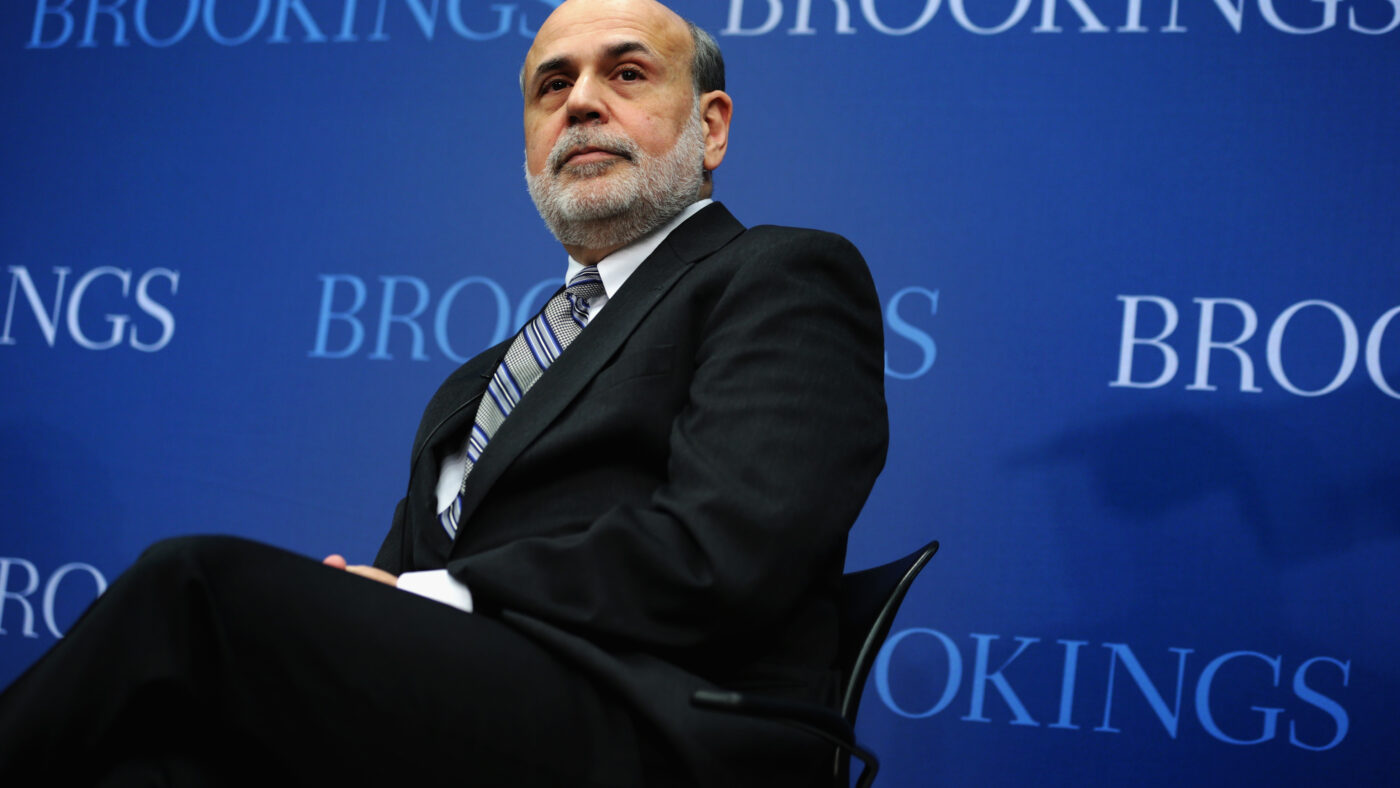
Helicopter Ben's review of the Bank of England is here - and it isn't good:

 s

We should all have a vested interest in how successful the Bank of England is in carrying out its objectives. Sadly, the Bank’s track record in recent years has left much to be desired, both in its ability to meet those objectives and its inability to communicate the thinking behind its decisions. Thus, the release today of Dr Ben Bernanke’s review of forecasting at the Bank is of prime importance.

Despite the Bank’s Governor, Andrew Bailey, calling it a ‘once in a generation’ review, the scale of the criticism and of the overhauls Bernanke proposes mean that it should not be seen as the last, or a one-off, but hopefully one in a series of reviews and reflections on the Bank’s performance. Criticism of the Bank has all too often been seen as an attack on its independence and integrity when it is not – and certainly should not be – but rather, in this case, is a challenge to its credibility and competence.

First, there is a damning indictment of how the Bank is run. Bernanke doesn’t pull any punches. The ‘most serious problems’, the review states, are ‘deficiencies of the Bank’s forecasting infrastructure’. Indeed, it is a tad ironic, given how often the Bank highlights the lack of investment in the UK economy, that the review describes a deep lack of investment in its own forecasting infrastructure.

A number of years ago, I highlighted the fact that one could read the Bank’s reports and not see ‘money’ or monetary indicators mentioned. One does not have to be a monetarist to appreciate that monetary and financial indicators need to be part of any policymaking dashboard. They have not been at the Bank. This has been one factor in its many mistakes.

One recommendation outlines steps to take, notably, ‘rich and institutionally realistic representations of the monetary transmission mechanism’. Given that the world’s second largest financial centre is on its doorstep, one might expect the Bank to be better on top of monetary and financial flows and transmission.

The review recommends several other updates that one would have expected to be already included in any basic monetary policy framework: ’empirically based modelling of inflation expectations’, ‘models of wage-price determination’, ‘detailed models of the financial sector, the housing sector, the energy sector, and other key components of the UK economy’ and greater attention to ‘supply-side elements’.

One is tempted to ask what they all do at Threadneedle Street, and whether the Monetary Policy Committee (MPC) is on top of these aspects when they make their policy decisions – as opposed to the blunt guesses at output gaps which often appear to frame their current approach. To be fair, there is much good publicly available research from the Bank’s staff. But perhaps this needs to resonate more with the policy process.

The second element of the review focuses on ways to better deliver a forecasting process that supports the MPC’s decision-making. My reading of the recommendations here is that a fresh approach should be taken at each meeting, given ‘the current bias toward making incremental changes’ and ‘the use of human judgements that paper over problems with the models, may slow recognition of important structural changes in the economy’. In other words, MPC members may need a better understanding of the changing global economic climate and how it impacts the UK.

Another recommendation is a good one: ‘staff should be charged with highlighting significant forecast errors and their sources’. In a nutshell, you should understand why the forecasts may be wrong before you make your next policy decision. Again, one might ask why it was necessary to consult externally to determine something so basic.

Positively, a further recommendation called for the central forecast to be augmented regularly with alternative scenarios. Such a scenario approach could be better used across UK economic forecasting generally, including at the OBR, too.

The third broad focus of the review was on more effective communication. The need for better communication is clear, based on recent years, in which the Bank’s anti-inflation credibility was rightly questioned by the markets, and the general public were shocked by the speed of the cost of living crisis. Castigating workers for daring to ask for pay increases was another resounding comms failure.

But while Bernanke encourages the Bank to better communicate with the market – and it should – one has to ask whether it should also be more on the front foot and guide, rather than being so reactive.

The review also correctly identifies the need to learn from best practice, highlighting better methods used by other central banks. Noting recent communication shortfalls, it calls for the Bank to be ‘exceptionally clear’ when it sees the market’s rate path as being inconsistent with its view.

As expected, the review calls for the elimination of the fan charts that the Bank has used. It was a more open question whether Bernanke would recommend that individual MPC members outline their own forecasts, as is the case at the US Federal Reserve. In the event, he has kicked this can down the road, ‘leaving decisions on this issue to future deliberations’. For what it’s worth, I think that they should go down that route – and would feel vindicated if they did, as I called for it back in 1997 after independence was granted.

The final recommendation is for a phased introduction of the changes. That is understandable. But it should also be the case that this is the start of a process to improve monetary policy – and ultimately economic policymaking decisions in the UK.

When it comes to the Bank, it is about policies, processes, plus personalities. Improving the processes is a necessary, but not sufficient condition to ensure a good outcome. In other words, addressing the issues raised in the Bernanke review will help, but not guarantee that all works well in the future.

In particular, a focus on the infrastructure of the Bank should not divert attention from its poor policy judgements. Indeed, given the fundamental problems that Bernanke has highlighted, a major overhaul may be necessary.

Dr Gerard Lyons is an economist and Research Fellow at the Centre for Policy Studies.