Since 2008, central bankers have resorted to ever more extreme measures to save us from depression. The result is a banquet of serious consequences for investors, says Satyajit Das.
Social progress has become synonymous with higher living standards. However, since the 1980s steady improvements in our living standards have been brought about largely by borrowing more.
Rising debt has helped to generate economic growth, by bringing forward spending that would normally have taken place over a period of years. Today, total borrowing by governments, households and non-financial corporations exceeds $160trn (around 230% of global GDP), triple the level of the early 1980s. Since 2008, total public and private debt in major economies has risen by more than $60trn, an increase of around 20 percentage points of GDP.
Unfortunately, around 85% of the debt incurred in recent years has funded the purchase of existing assets or consumption, rather than being used for creating new businesses or productive purposes that build wealth. Consequently, total debt has grown at rates well above the corresponding rate of economic growth. This means that the credit intensity of the US economy has increased. Around $4-$5 of debt is needed today to generate each additional dollar of GDP, up from $1-$2 30 years ago.
This problem is compounded by the overhang of accrued entitlements for retirement income, old-age care and health care. If unfunded government obligations to deliver what has been promised were taken into account, US debt levels would more than double. If we measure national net wealth as the difference between the current value of cash inflows (future tax revenues) and cash outflows (expected budget deficits, debt and committed future expenditure such as defence, justice, education, social welfare, health and old-age care), the US and UK have a net worth of –800% and –500% of GDP respectively. They are not alone: many other nations are overstretched to the point where de-facto insolvency is plausible.
This economic model is unsustainable, yet that reality has been ignored through successive financial crises. After the global financial crisis in 2008, policymakers refused to acknowledge the fundamental problems, instead resorting to traditional instruments – such as budget deficits, low interest rates and abundant liquidity – to restore growth and inflation, with the aim of managing the large debt burden. Strong growth would increase the ability to service the debt and reduce its size relative to GDP. Inflation would boost nominal growth and reduce the purchasing power of outstanding debt. But these fiscal and monetary policies have proved ineffective. They have brought artificial stability but no sustainable recovery.
While private-sector demand remains weak, expansionary fiscal policy appears unable fully to offset the decline in growth. Government spending only provides a short-term lift; unless higher levels of spending continue, it cannot lead to increased ongoing economic activity. Public infrastructure investment can increase growth, but potential returns on the infrastructure projects chosen need to be sufficiently high to avoid capital becoming tied up in poorly performing assets. Meanwhile, persistent budget deficits exacerbate already high levels of public debt.
On the monetary-policy side, central banks have cut interest rates (more than 650 cuts globally since 2009) and embarked on quantitative-easing (QE) programmes that are intended to promote debt-financed expenditure and stimulate economic activity. But high existing debt levels and weak banking systems have constrained new borrowing. Meanwhile, a combination of low commodity prices (especially in energy), overcapacity in many industries, lack of pricing power and currency devaluations has kept inflation low.
These policies have toxic side effects. Low interest rates affect the viability of retirement savings arrangements. They create economic distortions, allowing zombie companies to survive through lower debt-service costs. They encourage substitution of labour with capital, reducing employment and hence consumption. And they lead to mispricing of risk, resulting in overvalued asset markets. Low interest rates are also used in policymakers’ attempts to devalue their currencies to gain a competitive advantage in export markets. But retaliation by other countries limits the effectiveness of this approach. Instead, it results in destabilising short-term cross-border capital flows and a relentless spiral of lower interest rates, monetary expansion and deflationary pressures.
Exiting these fiscal and monetary policies is difficult. Austerity would result in an economic slowdown. Normalisation of interest rates would make high levels of borrowing unmanageable. Ending QE and hence withdrawing central-bank liquidity would affect asset prices and reduce demand for bonds and many equities. A large price correction in asset markets would reduce the value of the collateral that supports bank lending, setting off a fresh financial crisis. Hence the global economy may be trapped in a QE-forever cycle, where each bout of economic weakness forces policymakers to implement yet more expansionary fiscal measures and QE. Throughout this, debt levels continue
to increase, making the position more intractable.
Can we grow our way out of this mess?
The fundamental problem for the world is that real growth is driven by population growth, the development of new markets, increased productivity and technological innovation, not by financial sleight of hand. None of these factors is likely to come to our rescue in the near future. In the 20th century the world’s population doubled twice. In the 21st century it will not even double once. Worse, most population growth is in poorer countries that do not contribute to growth. There are few nations left to integrate into the global trading system to add new markets, while improvements in productivity have slowed.
Mankind continues its romance with technology, ignoring the fact that urgent problems such as climate change can be traced to inventions such as internal combustion engines, electricity and exploitation of fossil fuels.
Unfortunately, current innovation does not entail a radical reshaping of industry, but small improvements to existing processes to expand usage or increase efficiency. Smart phones and connectivity feed cheap narcissism, entertainment and shopping. Innovations such as robotics and artificial intelligence reduce living standards as they replace or deskill most workers. Innovation now enriches a few people who control or finance the technology at the expense of the vast majority of the population. This entrenches and increases inequality. Meanwhile, we face increasing resource constraints, especially water, food and energy, as well as environmental stresses. These are compounded by worsening demographics, inequality and exclusion.
A prolonged period of stagnation is the likely outcome. Economic growth remains weak and volatile. There is disinflation or deflation. Debt levels remain high or are on the rise. Competition for growth and markets drives beggar-thy-neighbour policies, resulting in slowdowns in trade and capital movements. These chronic problems require constant intervention in the form of fiscal stimulus and accommodative monetary policy, low rates and periodic QE programmes to avoid deterioration. Financial repression becomes implicit policy – in other words, official rates are held below the true inflation rate, which wipes out savers and allows over-indebted borrowers to deleverage. If deflation emerges, then negative interest rates engineer an explicit reduction in the nominal face value of debt.
The trajectory is evident in proposals to eliminate physical cash, ostensibly to prevent tax avoidance, crime and terrorism, as well as improve efficiency and lower costs. The real reason is that governments will need to cut already-low interest rates deep into negative territory. Eliminating physical money is necessary to prevent people escaping this by shifting their savings into banknotes and putting them under the bed.
It is not clear whether the authorities can maintain this uneasy equilibrium for a prolonged period. Policy errors or miscalculation may cause a complete loss of credibility or confidence in policymakers’ ability to control the situation. With policies now possessing the potency of rain dances, finance officials are turning to increasingly desperate measures, such as increased government spending directly financed by central banks creating new money.
The response of electorates to the reduction of living standards and destruction of savings by stealth is unpredictable. It is worrying to recall that in the Great Depression the destruction of the wealth of the middle classes was an important factor in the rise of extremism. Ultimately, the refusal to accept the high short-term costs of a major reset of the system in 2008 has created the conditions for a new crisis. Unwinding of the unsustainable excesses will be more difficult than in 2008. Problems, such as debt levels, are larger, while policymakers’ capacity to respond is limited. These problems will be accentuated by political stresses and the deteriorating geopolitical situation.
Developed countries, in particular, are now trapped. They cannot accept the pain of debt reduction. They will not accept any reduction of living standards. They must rely on fanciful financial engineering to maintain the illusion of stability. The world is remarkably complacent about the risks. Everyone hopes that “something” will restore the global economy to the exemplary growth rates of the last 30 years and its associated rises in living standards, wealth and opportunity. But as Sigmund Freud observed: “Illusions commend themselves to us because they save us pain… We must therefore accept it without complaint when they sometimes collide with a bit of reality against which they are dashed to pieces.”
• Satyajit Das is a former banker. This article is based on his latest book, A Banquet of Consequences. He is also the author of Extreme Money and Traders, Guns & Money.
Theresa May wants to build a country that works for everyone – the way to achieve that is through the transformative power of FE
In July, on the steps of Number 10, Theresa May outlined a desire to make Britain a country that works for everyone. She said that she wanted to tackle social injustice and help everyone to go as far as their talents would take them.
If the prime minister needs further proof of how further education can deliver that, she should take a look at the case studies in a new project from the University and College Union (UCU), which demonstrates the transformative power of education for people and their communities.
As the UK works out what Brexit really means and how to thrive outside the European Union, FE must demonstrate the crucial role it can play. The sector must argue for greater investment to create the necessary opportunities for people and the economy post-Brexit.
A million adult learners have been lost from the sector since 2009. Outside the EU – and, as looks likely, the common market, too – the UK will need to grow its own skilled workforce like never before. This will only be possible with a very deliberate and strategic investment in FE.
The ability of the UK to attract inward investment outside the common market will rely more than ever before on the skills of its workforce. Significant investment is needed now. We cannot turn on the tap in three years’ time and expect to see the skilled workforce we need just flowing out.
Funding cuts and area reviews have sent a damaging message that this is a sector in decline. Teachers in colleges are paid 6.2 per cent less on average than their colleagues working in schools. Workloads have skyrocketed and opportunities for professional development have diminished.
To find our feet outside the EU, we must position FE and its transformative potential at the heart of this country's success
We have also seen an exodus of teaching talent from the sector. There are now 15,000 fewer people teaching in FE colleges than there were six years ago.
If the government wants to achieve its aim to help people get on in life, it needs to take a strategic approach to engaging with staff, reverse the decline in teacher numbers and make the sector an attractive place for people to work. That means investing properly to aid the recruitment and retention of teachers and support staff.
To replace the 15,000 teaching staff we’ve lost and open up learning opportunities for at least 250,000 more students, UCU estimates that the government needs to invest about £700 million.
Investing in learning makes financial as well as practical sense. We know that for every £1 of public investment in FE, the government gets £20 back in economic returns. But there’s work to be done to convince the government that investment in more than just apprenticeships is worthwhile.
That’s why the sector needs to work together to make the case for significant investment, and for a workforce strategy that helps to ensure FE teachers are valued and want to remain in their jobs.
We’ve seen what the sector can do when it speaks with one voice. Last year’s #loveFE campaign, supported by sector organisations and trade unions across FE, helped to stave off anticipated cuts to 16-19 and adult learning funding in the November Budget.
We now need to harness that same energy to make the case for investment to support the sector as it meets growing skills demands. No matter what Brexit really means, if the UK is to find its feet outside the EU, we must position FE and its transformative potential at the heart of this country’s continued success. Andrew Harden is head of FE at the University and College Union
Great piece from Jim O'Neill about things governments could spend money on to achieve big returns - some really tasty ideas for essays:
Two important events loom on the calendar this month: the United States’ presidential election on November 8, and British Chancellor of the Exchequer Philip Hammond’s first Autumn Statement on November 23. Obviously, the latter will not be as significant an event as the former, but it nonetheless will have important consequences beyond the United Kingdom.
So far this year, economics has had to compete with more emotional issues, such as personal attacks in the US election, and UK voters’ decision to leave the European Union. But in both the US and the UK – and not only there – we can expect to hear more about active fiscal policies, especially with respect to infrastructure.
In the communiqué released after September’s G20 summit, the group’s leaders repeatedly mentioned steps to boost world growth through infrastructure investment, and argued for more coordination among monetary, fiscal, and structural policies. Although recent data from the US and China – and surprisingly also from the eurozone and the UK – suggest that GDP growth in the fourth quarter could improve upon the sluggish performance earlier in the year, a strong case can still be made for fresh policies to strengthen the world economy.
After recently leading the UK’s Review on Antimicrobial Resistance (AMR), and having thought long and hard about educational initiatives, I believe that it is time for a more adventurous response to both long-term and cyclical challenges, especially for developing countries. And reading Jeffrey D. Sachs’s recent commentary, “The Case for Sustainable Investment,” only strengthens my conviction that policymakers and key development-finance institutions have a huge opportunity.
Fiscal activism need not stop at infrastructure. In the Review on AMR, we showed that global GDP could suffer a $100 trillion loss over the next 34 years if we do not make certain public-health interventions between now and 2050. Those interventions would cost around $40 billion over a decade, which is to say that the investment needed to prevent $100 trillion in lost growth costs less than 0.1% of current global GDP. As an astute investor friend pointed out to me, this would be the equivalent of a 2,500% return.
Investments in health and education are crucial for the developing world’s long-term prospects. As someone closely associated with the BRICS countries (Brazil, Russia, India, China, and South Africa), it seems obvious to me that the New Development Bank (NDB) – or the BRICS Development Bank, as it was formerly known – can and should help these and other emerging economies cooperate in both areas.
The Review on AMR concluded that ten million annual deaths will be attributable to drug-resistant infections by 2050, and that drug-resistant strains of tuberculosis could cause one-quarter of them. It seems only reasonable that the NDB should announce steps to support pharmaceutical research into new TB treatments and vaccines, particularly for drug-resistant strains, given that TB is especially prevalent in the BRICS. And, beyond the BRICS, the other low-income countries that the NDB is trying to help will suffer even more without a proactive approach.
Similarly, many people in the BRICS and low-income countries do not have access to quality primary education, so the case for a major spending boost in this area should be clear. Sachs makes the same point, and former British Prime Minister Gordon Brown, who is now United Nations Special Envoy for Global Education, has called for more creative financing methods and social enterprise in this sector.
The NDB, the World Bank, the International Finance Corporation, and the Asian Infrastructure Investment Bank should all be considering the activist fiscal-policy course developed countries are now charting for themselves. And they should take it further, because the policy imperatives they face are ultimately all interrelated.
In the West, the turn toward fiscal activism reflects widespread recognition that monetary activism has outlived its usefulness, at least at the margin. To be sure, central banks technically should do whatever it takes to meet their inflation targets; but excessive quantitative easing has imposed high costs, and seems to have favored the few at the expense of the many.
With monetary activism past its sell-by date, an active fiscal policy that includes stronger infrastructure spending is one of the only remaining options. But it is not a free lunch, as many of its promoters often suggest, because policymakers cannot ignore the high levels of government debt across much of the developed world.
It will be interesting to see how Hammond navigates the path toward higher infrastructure spending, while sticking to the Conservative Party’s platform of fiscal responsibility. And in the US, if we look beyond the fog of election-season opprobrium, it appears that both sides are in favor of more infrastructure spending.
That being the case, the next US administration (regardless of who wins), together with a new UK leadership struggling to demonstrate its post-Brexit “openness,” should extend fiscal activism beyond domestic infrastructure to global development more generally. For example, with proper support, the World Bank could create new investment vehicles such as AMR or global-education bonds, which would support future development and salvage future global growth that may otherwise be lost.
The US and the UK both need to show that they can move beyond their highly sensitive – and, frankly, narrow-minded – domestic political issues. And they should remember that without the export markets that the BRICS and other emerging countries represent, all attempts to rebalance their economies will be in vain.
Top 10 Economics stories this week - have a dabble:
A list of some of the week’s most interesting stories on economic growth and social inclusion
1. Facts and figures. Business dynamism is slowing in the United States and market concentration is rising.It's threateningcompetitiveness and future productivity.(OECD Ecoscope; see also the Global Competitiveness Report 2016-2017)
Image: Census Bureau. Bureau of Economic Analysis
2. Medieval peasants had more vacation time than you. On the productivity of toiling. (Evonomics)
3. Surprisingly positivenews about broad-based growth from Europe and the US. (Financial Times)
4. As the gig economy grows, it becomes more pertinent to ensure the economic security of its workers and their access to equal social benefits. (Wall Street Journal, an earlier version is available on Brookings)
5. Absolutely everything you need to know about negative interest rates.(World Economic Forum)
6. What are the US candidates’ positions on fiscal policy, infrastructure and education? Here’s a 10-page overview. (The Economist)
7. Two columnists debate the free trade and populist backlash. (BloombergView)


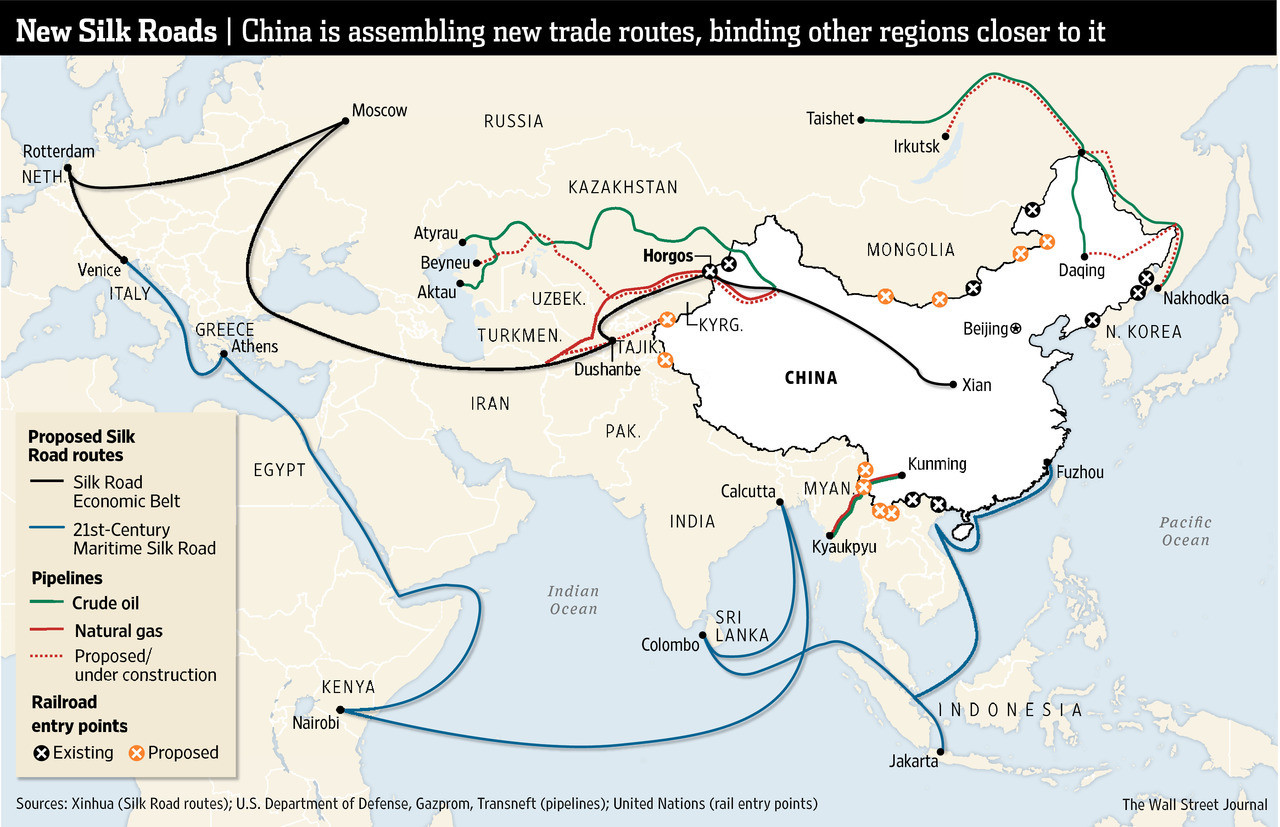 Image: Wall Street Journal