Quote of the day

“I find economics increasingly satisfactory, and I think I am rather good at it.”– John Maynard Keynes

Monday, 12 September 2022

India overtakes UK to become the 5th biggest economy

 This is a typical one-sided article - it tells you everything good but makes no mention of obstacles. Last week's Moneyweek does, so if you want a contrasting view go look it up:

India is quietly laying claim to economic superpower status

The rise of China has been the biggest story in the global economy in recent decades.
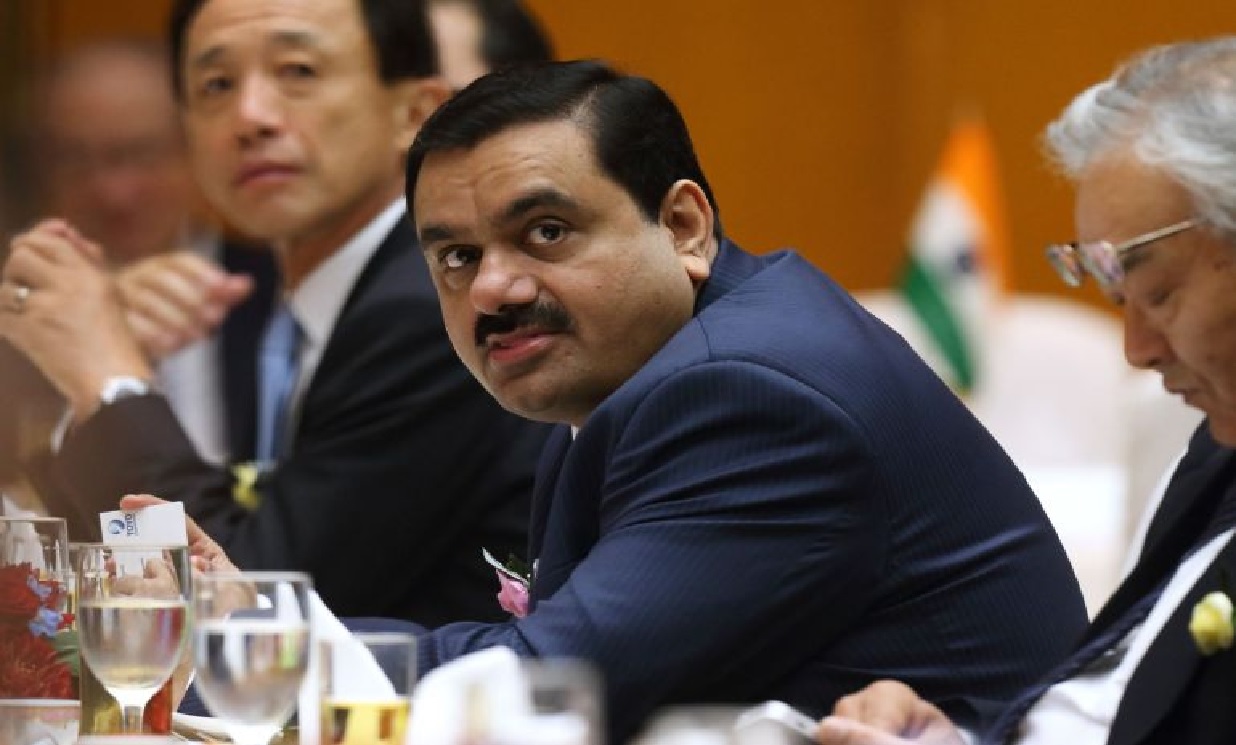
The rise of China has been the biggest story in the global economy in recent decades. But amid concern about its stumbling property market and global fears about inflation, the emergence of its neighbour, India, as a potential new economic superpower may be going under the radar.

You won’t find mention of it in Liz Truss’s blueprint for a “modern brilliant Britain”, but the UK has just been overtaken by India as the world’s fifth biggest economy. The nation of 1.4 billion people is on track to move into third place behind the US and China by 2030, according to economists.

And while the world became familiar with Chinese business titans such as Alibaba founder Jack Ma, the staggering wealth accumulated in recent years by Indian billionaires Gautam Adani and Mukesh Ambani has been less well publicised.

Adani, in particular, has come to represent India’s growing economic strength thanks to the rapid expansion of his Adani Group conglomerate, which covers everything from ports to airports, and solar power to television. Having entered the global Top 10 when he became Asia’s richest person in February, he is now ranked third with a fortune of $143bn (£123bn) and is closing fast on second-placed Amazon boss Jeff Bezos.

India was for many years seen as the poor relation to China, held back by a sclerotic, sprawling state sector and labyrinthine bureaucracy. It still has enormous problems of poverty and poor infrastructure, but it is beginning to emerge as a rival to its large neighbour with the kind of economic growth figures that were once the pride of Beijing.

Gross domestic product (GDP) grew by 13.8% in the second quarter of this year as pandemic controls were lifted and manufacturing and services boomed. Although double-digit growth is unlikely to be repeated in subsequent quarters, India is still on track to expand by 7% this year as it benefits from economic liberalisation in the private sector, a rapidly growing working population, and the realignment of global supply chains away from China.

“India has overtaken the UK to become the world’s fifth-largest economy,” says Shilan Shah, senior India economist at the consultancy Capital Economics, citing recent updated figures from the International Monetary Fund. “Looking ahead, India looks set to continue its march up the global rankings. In all, we think India will overtake Germany and Japan to become the third-largest economy in the world within the next decade.”

A key part of India’s continued rise will be its ability to grow its manufacturing sector and challenge China as the world’s No 1 exporter. India has already benefited from a large, well-educated, often English-speaking middle-class, helping the country to develop world-class IT and pharmaceutical sectors. It also has strong consumer demand, which accounts for about 55% of the economy compared with less than 40% in China.

Now the trick will be to benefit from its youthful working population to position itself as a manufacturing power to rival China, where an ageing labour force and rising pay levels are reducing its competitive edge. With a geopolitical wedge opening up between China and the west, India also has the opportunity to grow in reshaped international supply chains.

Nguyen Trinh, emerging markets economist at Natixis bank in Hong Kong, says the outlook is promising for India if it can keep investing.

“Indian demand is expected to be strong due to its demographics,” she says, “which is rather favourable with rising working-age population that will push for demand for essentials such as food and energy as well as infrastructure investment. The normalisation of activities post-Covid as well as an increase in government spending, particularly in infrastructure investment, is helping growth. Consumption rose in double digits and investment is accelerating.”

As with many aspects of India’s economic rise, Adani’s story is instructive. Now 60, the billionaire dropped out of Gujarat University, moved to Mumbai, and began trading diamonds before expanding into ports, construction and – latterly, but very profitably – renewable energy.

These widespread industrial interests have dovetailed perfectly with the country’s thirst for growth and seen his Adani Group holdings on the Indian stock market rocket in value. His main listed company, Adani Enterprises, has grown 50-fold in value in the past five years, while Adani Green Energy, which looks after its push into solar power, has doubled in value in the past year. The group is ploughing $70bn into green energy projects by 2030 with the aim of becoming the world’s largest renewable-energy producer – ironic given the controversy over its plans to expand coal mining in Australia.

Another important symmetry comes from Adani’s origins in the western state of Gujarat, which is also the power base of the Indian prime minister, Narendra Modi. Modi’s market reforms, which have included cutting corporation tax from 35% to 25% and opening up India to more foreign investment, have freed up entrepreneurs such as Adani and the man he overtook as the country’s richest person, Mukesh Ambani, head of Reliance Industries, and another Gujarati. Adani is close to Modi who has been known to use the tycoon’s private jet for campaign trips.

Nowhere is the local and global ambition of Adani more clearly illustrated than in Mundra, the Arabian Sea port which he wants to become the world’s largest by the end of the decade. With Modi’s government rolling out a 100tn rupees ($1.35bn, £1.1tn) infrastructure programme – it aims to build 25,000km of new roads in the current financial year alone – Adani is well placed to profit at every stage as the necessary raw materials are shipped in, turned into goods and services, and then sent back out around the world through Mundra.

This article was written by Martin Farrer from The Guardian and was legally licensed through the Industry Dive Content Marketplace.

Thursday, 8 September 2022

Why don't we grow very large companies?


More of Britain’s pension assets should be used to drive business growth

They are stuck in low-yielding bonds while companies are hungry for capital

Britain is a good place to be a budding entrepreneur. The country’s share of global venture-capital (vc) funding has doubled since 2018, to twice its share of global gdp. One out of every seven dollars the world invests in the earliest-stage “pre-seed” firms is invested in Britain. Although financial markets have taken a hammering this year, British vc funds have record amounts of unspent capital to throw at tomorrow’s winners.

But Britain is not a good place to turn promising startups into titans. There are many reasons for that, from Brexit to poor productivity. But a big stumbling block is that as British firms grow, the capital they need dries up along the way.

By the time these companies are raising tens of millions of dollars, rather than a few hundreds of thousands, their share of global vc funding has halved. “Deep tech” ventures, which try to develop industry-disrupting new technologies like quantum computing or artificial intelligence, fare especially poorly. And at the top of the capital ladder, Britain’s once-mighty stockmarket has drifted into insignificance. In 2006 it accounted for 18% of the equity capital raised in global initial public offerings. This year it has raised under 1%.

America provides a sobering contrast. It has spawned four trillion-dollar behemoths in the past five decades. Britain has not created a business worth even a tenth as much in more than a century. In 2011 the ftse 100 index of leading shares contained only two globally respected tech firms, Autonomy and Arm. Now it has none. Autonomy has been sold to Hewlett-Packard, an American giant, and its reputation tarnished by fraud claims (which its erstwhile leaders deny). Arm was bought by SoftBank, a Japanese conglomerate, and is now considering relisting on the nasdaq.

Comparisons between Britain and America are often misplaced. Much of America’s success in nurturing corporate titans was forged in the crucible of Silicon Valley, which has far more than abundant growth capital to recommend it. First-mover advantage in the vc market, long-standing partnerships with America’s Department of Defence and a culture that celebrates enterprise—they all turbocharge innovation. But Britain’s courts, excellent universities and world-class financial centre should make it unusually fertile ground for firms to grow, too.

What should be done? One focus ought to be to simplify corporate-governance rules. Britain has had more iterations of its baroque governance code in the past 25 years than it has had prime ministers. The result is a tangle of worthy disclosure requirements that distracts fledgling firms. Another should be to seek to attract those rare experts capable of making sensible commercial decisions in deep-tech areas like quantum computing. Britain’s excellent research universities are already a lure. One idea would be to create fellowships that combine an investment role with an academic one.

But the top priority is to direct the £4.6trn ($7.4trn) of assets held in British pension and insurance funds into more productive areas. Less than 1% of these assets is in unlisted equities. Defined-benefit pension schemes’ allocation to the British stockmarket has sunk from 48% to below 3%. The government should dilute the pension-fee cap that crimps investment in early-stage firms. It should reform accounting rules that incentivise funds to load up on low-yielding gilts rather than riskier equities. The plethora of tiny pension funds—like the 90-odd local-government schemes—should be merged so they can invest at scale. Britain has assets seeking returns, firms hungry for capital and a financial centre that can bring them together. It can do better. 

Tuesday, 5 July 2022

UK's balance of payments is a big issue - and getting bigger:


We are on track for a currency crisis – and bankruptcy

Our leaders fail to grasp that taking back control also means taking back responsibility

rishi sunak
Britain's current account deficit is easily the biggest such deficit ever CREDIT: Yui Mok /PA

Jeepers! We may be all tightening our belts in response to the cost of living squeeze, but as a nation, we are still spending far more than we are earning. Indeed, we are doing so in record amounts.

Living beyond our means has long been a national habit, so it shouldn’t perhaps come as any surprise. The sheer size of the addiction is nonetheless quite a shock.

According to the latest national accounts, published last week, Britain’s current account deficit widened in the first quarter of this year to an astonishing 8.3pc of Gross Domestic Product, easily the biggest such deficit ever.

In layman’s terms, what this means is that overall expenditure in the UK is exceeding national income by nearly a tenth of the value of the entire economy.

All other things being equal, there would be nothing left at all in the national coffers in little more than ten years from now if we were to carry on like this.

Fortunately, the balance of payments doesn’t work quite like that; the deficit is paid for by inflows of capital from overseas, so the fact that we are still able to finance such a high level of consumption might be taken as a vote of confidence in the UK, rather than a cause for panic.

What is more, the Office for National Statistics has changed the way it collects the data, which may make the deterioration look worse than it really is. 

All the same, the situation looks alarming enough; even excluding sales of gold and other precious metals, which can be volatile, the deficit was still an eye watering 7.1pc, against an average of just 2.6pc last year.

It is hard to be certain about the exact causes of this deterioration. Certainly the soaring costs of imported energy and food were a major factor. But the UK also exports quite a lot of oil and gas, so there was a big offset in this regard.

The main factor was instead a big leap in imports of finished and semi manufactured goods. There was also a marked deterioration in exports of goods, though not as large as the increase in imports. Whatever ministers say to the contrary, it is hard to escape the conclusion that this is at least in part a Brexit effect. 

As demand came surging back, post the pandemic, the flaws in Boris Johnson’s “oven ready” trade deal with the EU have been cruelly exposed.

The EU trades pretty much freely with us - our choice, by the way, so as not to further add to inflation with increased bureaucratic restrictions on trade - but our exports to them are already encountering the full panoply of barriers that afflict non EU members that are not part of the single market.

The surge in imports may also have something to do with acute labour shortages in key sectors. British companies may as a consequence have found it harder to satisfy domestic demand than otherwise. 

In any case, there is no denying where the balance of power in our new trading relationship with Europe lies; it is predictably with the much larger jurisdiction - the EU. So much for the much touted claim that because we import far more from them than they do from us, Britain would maintain the whip hand in any ongoing relationship.

The total trade deficit has widened

Combination chart with 4 data series.
The chart has 1 X axis displaying Time. Data ranges from 2019-03-01 00:00:00 to 2022-03-01 00:00:00.
The chart has 1 Y axis displaying £bn. Data ranges from -62.2 to 37.
SOURCE: ONS
End of interactive chart.

Small wonder that the Government still refuses to commission an economic impact assessment of Brexit; the findings would not reflect well on our exit deal.

In the circumstances, it is perhaps a surprise that the pound is not under more pressure in foreign exchange markets than it is. So far this year, it has fallen more than 10pc against the dollar, but it has been broadly flat against the euro, and is off only 3pc on a trade weighted basis.

There is little sign as yet of a fully blown currency crisis, where interest rates have to be jacked up precipitously to guard against the inflationary consequences of a collapsing pound.

A big current account deficit doesn’t necessarily matter if there are enough investors willing to finance it with inflows of capital. But it does leave the country reliant on what Mark Carney, former Governor of the Bank of England, called “the kindness of strangers”.

For the moment, there seems to be no particular problem in this regard, despite the rising interest rate differential with the US. Anecdotally, there is still a long queue of foreign buyers looking to buy up British companies, and even to invest in UK Government debt. Net investment in the UK increased by £158.9 billion in the first quarter.

It may be that appetite for British assets is about to plummet, but this is by no means set in stone. Those who think that UK gilts are “sitting on a bed of nitroglycerin”, as the self styled bond king, Bill Gross, famously said of them at the time of the financial crisis, should consider this; Britain is virtually alone in the world in having never defaulted.

Theoretically more creditworthy countries such as the US and Germany most certainly have, the latter massively on at least four occasions in the last century. This enviable and almost unique record of creditworthiness is not something the UK Treasury is about to surrender. However bad things get, Britain will always pay its debts.

Nonetheless, looking at the latest balance of payments statistics, there are some worrying straws in the wind that are eventually going to require huge and politically difficult changes in policy. 

Portfolio investment overseas decreased by £103.6bn in the first quarter, reflecting a quite widespread sale of overseas shares. This is tantamount to selling off the family silver to finance current consumption, and is plainly not sustainable on an indefinite basis.

The ONS also struggled to reconcile the recorded current account deficit of £55.7bn with the £29.6bn of net inflows. Since the balance of payments must by definition always balance, the shortfall is listed as unexplained “net errors and omissions”.

Either the current account deficit is not as big as reported, or there is another possibly quite unstable source of inflow which is not being recorded.

Whatever the truth, the UK plainly cannot keep running up current account deficits of this order of magnitude indefinitely, or for that matter expect the rest of the world to keep financing them - not in any case while it remains a relatively high tax, big state economy. 

Taking back control also means taking back responsibility, and yet our Brexiting Government doesn’t seem to have grasped the fact. The remorseless logic of Brexit is that of the small state, low tax economy, yet we seem headed in the opposite direction. Uncorrected, our present trajectory can only end in a currency crisis and bankruptcy.

To finance a trade deficit of the current size, and eventually bring it back into balance, you need to attract a lot of foreign investment. You do not go about this task by whacking up income tax, corporation tax, and other forms of business taxation. Let’s hope that we don’t require another mega crisis for this brutal truth to sink in.