Quote of the day

“I find economics increasingly satisfactory, and I think I am rather good at it.”– John Maynard Keynes

Tuesday, 16 April 2024

Neets - why so many?


Why are so many young people not looking for work?

In a post-Covid hangover, a million ‘Neets’ youngsters are neither in work or education, despite employers being desperate to fill roles

ILLUSTRATION BY NINA KRAUSE
The Sunday Times
Share

In a busy youth centre in Bristol, Rozzy Amos is on the front line of a puzzling crisis that has been building behind closed doors the length and breadth of Britain since the Covid pandemic: the high numbers of young people not in work and, in many cases, not even looking for work.

Economists and statisticians are puzzling over how a country where employers are desperately short of workers can have, according to an analysis of data released last week from the Office for National Statistics (ONS), a million young people neither in full-time education nor employment.

Amos, head of strategy at the Prince’s Trust, said that she sees young people either struggling with their mental health, lacking self-confidence, or struggling to find the right job to suit their skills.

Rozzy Amos says that young people have “lost their confidence” when it comes to looking for work
ROZZY AMOS/PRINCES TRUST

“We see lots of young people who have lost their confidence in looking for work — sometimes that’s because they don’t have the skill sets, often it’s because people are sending out so many CVs and they are not getting anything back,” she said.

The analysis of the official data by the Institute of Employment Studies suggests that some one in seven young people are not in employment, full-time education or training, the highest proportion since 2015.

Another way to measure young people’s engagement with work, the cohort known as Neets — 16 to 24-year-olds who are not in employment, education or training — also paints a worrying picture. This gauge, which includes young people who are in part-time education, stands at 12 per cent, its highest rate in eight years.

Nobody knows precisely why we have so many Neets. Are the young people Amos is seeing at the Prince’s Trust typical, or are there other reasons for these worryingly high numbers?

Health

“It’s clear that mental health is one of the drivers,” said Barry Fletcher, chief executive of Youth Futures Foundation, set up by the government in 2019 to improve opportunities for the nation’s youngsters.

This is borne out by data from the Prince’s Trust, which found that 32 per cent of Neets had been unable to apply for jobs in the past 12 months because of their mental health.

Research shows that young people are increasingly reporting symptoms of depression, anxiety or bipolar disorder. A three-year study by the Resolution Foundation, published last month, found that in 2021-22 one in three people aged 18 to 24 had reported issues with their mental health, up from one in four in 2000.

Another survey measuring the feelings of young people found changes before and after the pandemic. The Wellcome Trust’s Myriad (my resilience in adolescence) project has reported that young people who went through Covid lockdowns were more likely to experience social, emotional and behavioural difficulties than a group of students analysed before the pandemic.

And while Covid caused young people to feel anxious and lonely, the findings of a survey by the Prince’s Trust show that they remain unhappy even now. The cost of living crisis is another factor weighing on their emotions, according to its 2024 Youth Index survey. It found that 62 per cent of the young people it surveyed “always or often” felt stressed, and 55 per cent felt anxious.

But not having a job can itself perpetuate the situation. The Prince’s Trust Youth Index survey, which has been running for 15 years, found that 32 per cent of Neets are reporting mental health issues due to being out of work.

Other lockdown legacies

Another hangover from the pandemic has been the rising number of children not turning up at school. Consequently they are emerging into the workplace lacking the qualifications to get hired, and perhaps also missing the careers guidance that schools offer pupils as they prepare to leave.

Research by the House of Commons Library found that the absence rate at state-funded schools in England has risen from 4.5 per cent in 2016-17 to 7.3 per cent in 2022-23.

Another way that lockdowns damaged the current generation of school-leavers has been the way their communication and social skills have suffered from being stuck at home, doing lessons on computer screens. Some managers describe how new joiners can struggle to hold eye contact, or find it difficult interacting with new people in the workplace.

Part of that may also be because employers were prevented from offering students work experience during lockdowns.

Apprenticeships

There is some concern that apprenticeships designed for those who do not study A levels and take other further education routes are in decline.

James Reed of the eponymous recruitment agency Reed was so concerned by about the skills of young people that he commissioned research, along with the Recruitment and Employment Confederation, from the education think tank EDSK. It found that the proportion of 16-year-olds on apprenticeships had dropped from 7.8 per cent in 1999 to 2.8 per cent in 2022.

Since 2015, the number of entry-level apprenticeships for under-19s had fallen by 38 per cent to 77,510 in 2022-23. For those aged 19 to 24 the number was also down 38 per cent.

The government’s apprenticeship levy, paid by large employers to fund training, the report argued, encouraged employers to spend money up-skilling their existing workers via training courses. Of the learners who started an apprenticeship in 2021-22, only 26 per cent were on entry-level learning, compared with 53 per cent before the introduction of the levy. Apprenticeships aimed at higher learners — foundation degrees and higher — rose more than fivefold between 2014/5 and 2022/3.

The government’s apprenticeship levy, paid by large employers to fund training, has, in reality, encouraged employers to spend money up-skilling their existing workers via training courses. Of the learners who started an apprenticeship in 2021-22, only 26 per cent were on entry-level learning, compared with 53 per cent before the introduction of the levy.

Not the right job

Some analysts say the increasing number of school-leavers going to university rather than into apprenticeships is part of the problem. Research by the Chartered Institute of Personnel and Development found that graduates are finding it difficult to land the jobs they studied for, while more than a third who are in work are overqualified for their roles.

Some researchers suggest many graduates are waiting to find a job that fits their qualifications rather than starting at the bottom of the ladder.

Geography also counts. ONS data shows that the highest number of Neets are in northeast England (17.2 per cent of all Neets) and Humber (14.3 per cent). The job markets in post-industrial areas such as these may not be offering the opportunities young people might want.

Darren Hankey, principal at Hartlepool College of Further Education, said that docks and the mines provided full-time work in the past, but those lost jobs had not been replaced by permanent roles. “Hartlepool is a wonderful place with lots of bright spots but there is a lot of poverty,” he said. “We’ve got one of the highest levels of insecure work. I wonder if that fuels where we are in terms of younger people opting not to work: the quality of work is probably not as good as it needs to be.”

Living at home

Fletcher at Youth Futures estimated that 350,000 of the 851,000 Neets are not claiming the £67.41 per week they would be receiving on universal credit. So, without work and without benefits, what do they do for money?

“A lot will be living with their parents,” said Fletcher.

ONS data shows that there was a 13.6 per cent rise in adult children living with their parents in 2021 compared with decade earlier. It said this was mainly caused by expensive housing but added: “Adult children were also more likely to be unemployed or providing unpaid care.”

Back in Bristol, Amos stressed: “We don’t ever meet young people who don’t want to work”. But she warned that young people are aware they are being labelled as lazy, workshy or “too picky”. Such attitudes can make matters worse, she said. “It doesn’t help that young people feel they’re the ones doing something wrong and not being part of society, but ultimately they’re pretty desperate to be connected with their community.”

Sunday, 14 April 2024

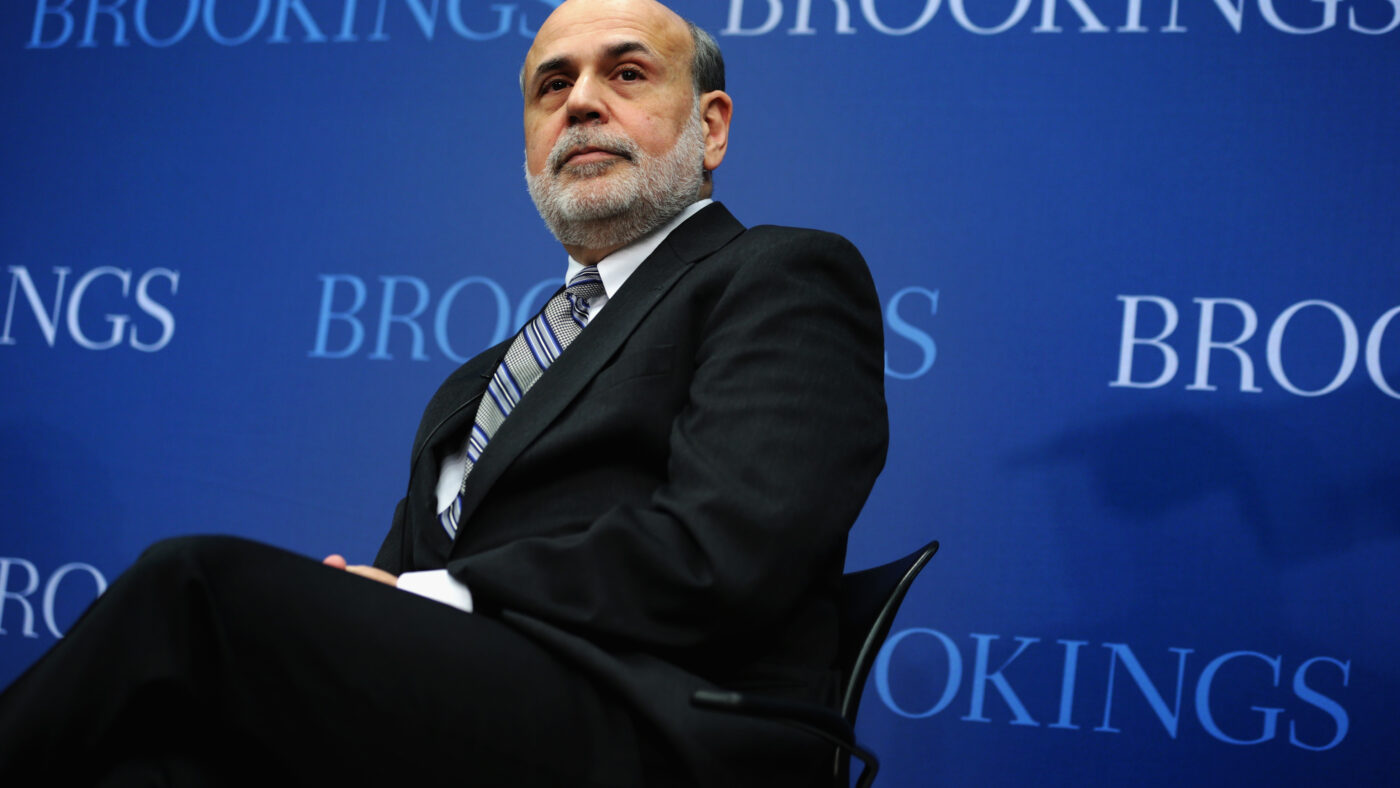
Helicopter Ben's review of the Bank of England is here - and it isn't good:

 s

We should all have a vested interest in how successful the Bank of England is in carrying out its objectives. Sadly, the Bank’s track record in recent years has left much to be desired, both in its ability to meet those objectives and its inability to communicate the thinking behind its decisions. Thus, the release today of Dr Ben Bernanke’s review of forecasting at the Bank is of prime importance.

Despite the Bank’s Governor, Andrew Bailey, calling it a ‘once in a generation’ review, the scale of the criticism and of the overhauls Bernanke proposes mean that it should not be seen as the last, or a one-off, but hopefully one in a series of reviews and reflections on the Bank’s performance. Criticism of the Bank has all too often been seen as an attack on its independence and integrity when it is not – and certainly should not be – but rather, in this case, is a challenge to its credibility and competence.

First, there is a damning indictment of how the Bank is run. Bernanke doesn’t pull any punches. The ‘most serious problems’, the review states, are ‘deficiencies of the Bank’s forecasting infrastructure’. Indeed, it is a tad ironic, given how often the Bank highlights the lack of investment in the UK economy, that the review describes a deep lack of investment in its own forecasting infrastructure.

A number of years ago, I highlighted the fact that one could read the Bank’s reports and not see ‘money’ or monetary indicators mentioned. One does not have to be a monetarist to appreciate that monetary and financial indicators need to be part of any policymaking dashboard. They have not been at the Bank. This has been one factor in its many mistakes.

One recommendation outlines steps to take, notably, ‘rich and institutionally realistic representations of the monetary transmission mechanism’. Given that the world’s second largest financial centre is on its doorstep, one might expect the Bank to be better on top of monetary and financial flows and transmission.

The review recommends several other updates that one would have expected to be already included in any basic monetary policy framework: ’empirically based modelling of inflation expectations’, ‘models of wage-price determination’, ‘detailed models of the financial sector, the housing sector, the energy sector, and other key components of the UK economy’ and greater attention to ‘supply-side elements’.

One is tempted to ask what they all do at Threadneedle Street, and whether the Monetary Policy Committee (MPC) is on top of these aspects when they make their policy decisions – as opposed to the blunt guesses at output gaps which often appear to frame their current approach. To be fair, there is much good publicly available research from the Bank’s staff. But perhaps this needs to resonate more with the policy process.

The second element of the review focuses on ways to better deliver a forecasting process that supports the MPC’s decision-making. My reading of the recommendations here is that a fresh approach should be taken at each meeting, given ‘the current bias toward making incremental changes’ and ‘the use of human judgements that paper over problems with the models, may slow recognition of important structural changes in the economy’. In other words, MPC members may need a better understanding of the changing global economic climate and how it impacts the UK.

Another recommendation is a good one: ‘staff should be charged with highlighting significant forecast errors and their sources’. In a nutshell, you should understand why the forecasts may be wrong before you make your next policy decision. Again, one might ask why it was necessary to consult externally to determine something so basic.

Positively, a further recommendation called for the central forecast to be augmented regularly with alternative scenarios. Such a scenario approach could be better used across UK economic forecasting generally, including at the OBR, too.

The third broad focus of the review was on more effective communication. The need for better communication is clear, based on recent years, in which the Bank’s anti-inflation credibility was rightly questioned by the markets, and the general public were shocked by the speed of the cost of living crisis. Castigating workers for daring to ask for pay increases was another resounding comms failure.

But while Bernanke encourages the Bank to better communicate with the market – and it should – one has to ask whether it should also be more on the front foot and guide, rather than being so reactive.

The review also correctly identifies the need to learn from best practice, highlighting better methods used by other central banks. Noting recent communication shortfalls, it calls for the Bank to be ‘exceptionally clear’ when it sees the market’s rate path as being inconsistent with its view.

As expected, the review calls for the elimination of the fan charts that the Bank has used. It was a more open question whether Bernanke would recommend that individual MPC members outline their own forecasts, as is the case at the US Federal Reserve. In the event, he has kicked this can down the road, ‘leaving decisions on this issue to future deliberations’. For what it’s worth, I think that they should go down that route – and would feel vindicated if they did, as I called for it back in 1997 after independence was granted.

The final recommendation is for a phased introduction of the changes. That is understandable. But it should also be the case that this is the start of a process to improve monetary policy – and ultimately economic policymaking decisions in the UK.

When it comes to the Bank, it is about policies, processes, plus personalities. Improving the processes is a necessary, but not sufficient condition to ensure a good outcome. In other words, addressing the issues raised in the Bernanke review will help, but not guarantee that all works well in the future.

In particular, a focus on the infrastructure of the Bank should not divert attention from its poor policy judgements. Indeed, given the fundamental problems that Bernanke has highlighted, a major overhaul may be necessary.

Dr Gerard Lyons is an economist and Research Fellow at the Centre for Policy Studies.

Saturday, 6 April 2024

Thoughts on QE and the losses now being suffered


CENTRAL BANKS, INCLUDING THE BANK OF ENGLAND, COPIED AMERICA’S QE POLICY

Money-printing caused muddle and mess 

Central banks’ quantitative-easing programmes (buying bonds with newly created money to bolster growth) have failed and left taxpayers with a huge bill, says Philip Pilkington. Policymakers are in denial

Inearly February, to almost no fanfare, the Treasury Committee released an extensive report on the Bank of England’s quantitative tightening (QT) programme. QT was the Bank’s attempt to reverse the quantitative easing (QE) programmes it had pursued intermittently over the last 15 years. QT aimed at removing some of the money that the Bank had pumped into the broader banking system by selling some of the large quantities of assets that they had accumulated throughout QE. While the Treasury Committee’s report was nominally about QT, it also had to consider the QE programme itself and its long-term effects.

The report found that the unwinding of QE was proving extremely costly and that these costs were being borne by the Treasury – and, through the Treasury, by the taxpayer. The Committee estimated that “annual losses in each of 2023 and 2024 will amount to £40bn, eroding the cumulative £124bn positive cash flow that was generated up until September 2022”. 

In only two years, 65% of the gains that the assets had accumulated in the previous 13 years would be lost. At this rate, all the gains would be wiped out by 2025 and thereafter the programme would be incurring major losses. And all of this is based on the rosy assumption that inflation does not make a comeback in the coming months and years. If it does, the losses will be even larger.

The Committee expressed concern about this situation: “Notwithstanding the operational independence of the monetary policy… it strikes us as highly anomalous that decisions have been and are being taken concerning huge sums of public money without any regard to the usual value-for-money requirements”. 

This is a pertinent criticism indeed. Recall that in 2022 Liz Truss announced tax cuts in her mini-budget that would cost £30bn. When the new prime minister announced this the bond markets had a heart attack; the Treasury and the Bank of England then leaned on the prime minister and she was out of the door shortly after. Yet the year after this debacle, the Bank itself would be costing the Treasury £40bn annually until at least 2024, and not a whisper.

“BEN BERNANKE REFERRED TO HIMSELF AS A ‘GREAT DEPRESSION BUFF’”

Furthermore, the Committee uncovered evidence from expert testimony that the Bank’s QE programmes that had created these problems were ill-defined. Experts could not really agree on what goals QE had achieved. Some stated that the first round of QE was good for the economy, but subsequent rounds were not. Economists admitted in testimony that it was next to impossible to gauge the impact of the programme. The Bank itself seemed unable to offer a coherent, testable narrative about what the programme that was now costing the country a small fortune had achieved. 

A JAPANESE DISEASE

Quantitative easing is now almost a quarter of a century old. Shortly after the terrorist attacks on New York City on 11 September 2001, the Bank of Japan announced that it would increase the intensity of a new monetary policy it was experimenting with: quantitative easing, or QE for short. For many years, the Japanese economy had been experiencing falling prices and economic stagnation. It was hoped that this new type of monetary-policy intervention would lift the economy from its slumber. 

At the time in the Western world few were paying attention. There was little time to consider an obscure operation being undertaken by the Japanese central bank when the prospect of major terrorist attacks on Western countries was looming. Yet in the bowels of the Western central banks, many economists were paying attention. In a note written in November 2001, for example, the Federal Reserve Bank of San Francisco (FRBSF) considered the measures undertaken by the Japanese with some scepticism. 

“A modest expansion in the growth rate of the money supply is likely to have a limited expansionary impact unless it is accompanied by the public’s expectation of higher future inflation rates,” the note stated, “and quantitative easing is not likely to change inflation expectations.”

While Western banks were sceptical about the Japanese central bank’s attempts to fight deflation with QE, they were nevertheless forming a theoretical picture of what was going on – a theoretical picture that would be applied to the Western economies less than a decade later. The FRBSF argued that the Japanese economy was in a “liquidity trap”. This is a situation in which “interest rates on short-term assets have been driven to zero”. Monetary policy had effectively run out of juice. 

Since rates could not obviously be lowered below zero, the central bank was unable to stimulate the economy further. This is where QE came into the picture: rather than simply aiming at lowering interest rates, the central bank could flood the banking system with cash balances to try to force the banking system to extend more loans.

A year after the FRBSF put out its note, an economist from the US Federal Reserve’s board of governors gave a speech in Washington DC. “The US government has a technology, called a printing press,” the economist said. “By increasing the numbers of US dollars in circulation the US government can also reduce the value of a dollar in terms of goods and services, which is equivalent to raising prices in dollars of goods and services.” 

This was a much more aggressive interpretation  of how QE worked and what it could do than  the one put out a year earlier by the FRBSF. The economist who gave the speech, whose name was  Ben Bernanke, considered himself a disciple of  Milton Friedman’s monetarism. 

BEN BERNANKE’S BIG BET

Bernanke was an expert on the US economy during  the Great Depression, referring to himself as a  “Great Depression buff in the same way some people are Civil War buffs”. Described by Reason magazine as a “libertarian-leaning Republican”, Bernanke was convinced that his favourite economist was correct in his interpretation of the Great Depression. 

Friedman had argued that the key cause of the Great Depression was that the money supply in the United States had fallen precipitously. He reasoned that if the Fed had been less cautious as the Depression had started to set in and flooded the banking system with newly issued money, the economy would soon have recovered.

When the banking system started to go into meltdown in 2008, Bernanke was well placed to observe and diagnose events. In 2006, he had been appointed chairman of the Fed by George W. Bush. From the beginning of the crisis Bernanke viewed it, correctly, as a historic moment; the closest America  had come to having another Great Depression since World War II. 

“We have learned from historical experience with severe financial crises that if government intervention only comes at a point at which many or most financial institutions are insolvent or nearly so, the costs of restoring the system are greatly increased,” Bernanke said in the speech in Washington DC in October 2008.

What started as an effort to save the banks soon transformed into an aggressive and proactive QE programme by the Federal Reserve. One month after Bernanke’s speech in DC, the Federal Reserve started by buying $600bn in mortgage-backed securities. By March 2009, the central bank had bought $1.75trn of bank debt, mortgage-backed securities, and Treasury notes. Bernanke had received the opportunity to experiment with the policies advocated by his hero Friedman, and he had done so with gusto. After Bernanke’s foray into QE, no serious economist could any longer say that the policy had never been tried. 

As the years rolled on, so too did the QE programmes. The second round, QE2, came in November 2010 and the third, QE3, in September 2012. By the time a fourth round had been launched by Bernanke’s successor in response to Covid in 2020, the policy was no longer an innovative and experimental monetary policy. Rather, it had become standard operating procedure. For a man with only a hammer, everything looks like a nail – and QE was now being used for everything from cleaning up banking crises to tackling global pandemics.

Along the way, the policy had picked up no shortage of critics. We will never know what Friedman thought about the endless iterations of Bernanke’s QE policy, as he died in 2006, but his co-author Anna Schwartz was still alive and perfectly willing to voice her opinion. In a 2009 op-ed published in The New York Times and entitled “Man Without a Plan”, Schwartz argued against Bernanke being reappointed Federal Reserve chairman. 

She argued that Bernanke had indulged in aggressive monetary easing without a clear plan of how large it would be, what its goals were, and when it should be reined in. Rather, she wrote, Bernanke stumbled from one QE programme to the next while each round led to ever more disruption in the financial system. 

HERDLIKE BEHAVIOUR

As is so often the case, other central banks around the world did not do their own homework when it came to post-crisis policy. Instead, they copied the homework of the United States. The international economics community has an awful tendency to move slowly and in a herd, with specialist journals suggesting which direction the herd should go in next. The Bank of England’s QE programme kicked into gear in March 2009. The Bank accumulated an enormous hoard of purchased assets: £175bn by the end of October 2009.

Bernanke’s interest in the Great Depression had by now spread to the rest of the economics profession. In a speech explaining the rationale for the Bank of England’s QE, David Miles, a member of the Monetary Policy Committee, the very first paper cited was from Bernanke’s book on the Great Depression. Miles went on to lay out a monetarist argument that would have made Friedman proud. 

Miles’ presentation was no doubt his own, but in terms of his ideas he was copying his homework. If Bernanke was a man without a plan, as Schwartz said, then the Bank of England had simply copied the actions of a man without a plan. They outsourced their policy to the Americans and assumed that the Americans knew what they were doing.

“BY THE TIME COVID ARRIVED IN 2020, QE HAD BECOME STANDARD OPERATING PROCEDURE”

The never-ending QE programmes implicitly assumed that inflation would never return. In the wake of the 2008 financial crisis, and the slow economic growth that followed, it became fashionable to say that the economy was in permanent stagnation owing to various imbalances – from trade imbalances to income inequality. This metanarrative allowed central bankers to ignore the awkward question of what might happen when QE had to be reversed. It also allowed them to avoid the awkward matter of what might happen to the value of the assets that they held if inflation appeared.

Sadly, for the proponents of QE, inflation did indeed appear. In Britain inflation emerged on the scene in 2021 in response to pressures placed on the supply side of the economy by the lockdown policies. Most economists and central bankers did what they thought was the sensible thing to do: they buried their heads in the sand. They simply denied that inflation was a problem and insisted that it was transitory and would pass. It did not pass. In Britain inflation peaked at the end of 2022 above 11%. Inflation was not transitory.

This explains why the Treasury Committee report has revealed both large losses accruing to the government and a lack of ability on the part of economists to clearly explain what the point of 15 years of QE actually was. The basic model of the economy that the Bank’s economists held in their head – one that would be perpetually in deflationary stagnation – was wrong. The stagnation has largely remained, but the deflation has given rise to inflation. Although they will not admit it in public, the economists who promoted QE did not believe that this would happen – indeed, many probably did not believe that it could happen. But it could happen, and it did happen and now they do not know what to do. 

That is the dirty little secret that the Bank does not want to get out: no one really knows what to do. The model of a perpetually deflationary economy that most policymakers and commentators adopted in the past 15 years is dead and there is nothing to replace it. This is not discussed in polite company because there is nothing to replace this model. That explains, to a large extent, the otherwise surprising lack of attention that journalists are giving to the shocking Treasury Committee report. 

The report has revealed not just that the emperor, in this case the Bank of England, has no clothes, but that his entire entourage is also naked. And in this entourage is everyone from financial-market players to academic economists to financial journalists. In such an embarrassing situation it is in everyone’s self-interest simply to pretend not to notice the rampant nudity.

BOND INVESTING AMID UNCERTAINTY

While the shenanigans at the Bank of England have ramifications for the whole country, they also have more immediate consequences for those who hold part of their wealth in British government debt. Rising interest rates have meant falling bond prices. These declines in the value of bonds are particularly extreme because of the effects of the QE programmes. 

As interest rates get closer and closer to zero, their impact on bond prices increases. This is known as “convexity”. This means that when QE pushed interest rates ever lower, the sensitivity of the bond price to future interest rates increased. It is also as if central banks that engage in QE are pulling on an elastic band and the moment they stop pulling, the elastic band snaps back, stinging their fingers.

In 2022 especially we saw the elastic band of very low interest rates snap back in dramatic fashion. A recent report by the pensions regulator found that British pension funds lost around £425bn in that year. This represented an overall fall in asset value of nearly a quarter. The financial press has been keen to blame this on Truss’s mini-budget, but the reality is that the main driver is the Bank’s QE and QT programmes. Since bond holdings are supposed to be the more stable component of investors’ portfolios, this raises the question of whether savvy investors might be able to offset this risk.

“THE ECONOMISTS WHO PROMOTED QE DID NOT BELIEVE INFLATION COULD RETURN”

QE is not just a British problem. Central banks across the developed world pursued these policies in lockstep. Still, diversifying your portfolio away from simply holding British government bonds makes sense. You will be better insulated from major market volatility, such as we saw after Truss’s ill-fated mini-budget. It also insulates an investor from the ever-present risk of the decline of sterling. In 2023 Britain ran a current-account deficit of nearly 5%, all of which is financed by capital inflows that can easily reverse in a recession, so building protections into your portfolio is wise.